

ANMAT Disposition 11857/2017
ANMAT Disposition 11857/2017 regulates closed systems for large-volume parenteral solutions in Argentina.
ANMAT Disposition 11857/2017
ANMAT Disposition 11857/2017 regulates closed systems for large-volume parenteral solutions in Argentina.
ANMAT Disposition 11857/2017 is an Argentine regulatory measure governing closed systems used for large-volume parenteral solutions (LVPs). Issued by the National Administration of Drugs, Foods and Medical Devices (ANMAT) and published on November 27, 2017, it established requirements intended to reduce contamination risks during the preparation and administration of these sterile solutions. Its Article 1 was subsequently replaced by ANMAT Disposition 5146/2026, introducing a more specific definition of a closed manufacturing process.
What does ANMAT Disposition 11857/2017 regulate?
The original regulation required the use of closed systems for manufacturing large-volume parenteral solutions and established provisions for replacing open infusion systems. It also approved a technical annex covering physical, chemical and biological requirements, as well as finished-product quality controls.
The regulatory framework addresses container integrity, infusion connections, material compatibility and protection against microbiological contamination.
What are large-volume parenteral solutions?
Under the regulation's technical annex, large-volume parenteral solutions are sterile, pyrogen-free aqueous preparations packaged in individual containers with a capacity of at least 100 mL and subjected to terminal sterilization. The definition includes intravenous solutions, irrigation solutions and peritoneal dialysis solutions, while excluding products of biological origin.
These preparations require careful control of manufacturing conditions, packaging integrity and finished-product quality because contamination may have significant consequences for patient safety.
Closed infusion systems versus closed manufacturing processes
The distinction between these concepts is essential for regulatory interpretation.
A closed infusion system prevents contact between the parenteral solution and the surrounding environment throughout preparation and administration. A closed manufacturing process, as defined in the amended Article 1, requires primary container formation, filling and sealing to be performed without environmental exposure of the product during critical manufacturing stages, maintaining that condition until terminal sterilization.
Therefore, a container designed for closed administration does not automatically demonstrate compliance with closed manufacturing requirements. Each concept addresses a different stage of contamination control.
Quality control requirements and laboratory testing
The technical annex identifies several categories of tests relevant to container performance and finished-product quality:
- Physical testing: container integrity, leak resistance, transparency, mechanical strength and connection performance.
- Chemical testing: compliance of packaging materials with applicable pharmacopoeial requirements.
- Biological testing: microbial impermeability, toxicity and pyrogenic substances.
- Particulate matter testing: compliance with the Argentine Pharmacopoeia or other internationally recognized pharmacopoeias.
- Finished-product controls: verification of relevant quality specifications and the ability to deliver the container contents.
Particulate matter testing remains an important analytical requirement for parenteral preparations. A closed system may reduce opportunities for environmental contamination, but it does not replace analytical verification of finished-product quality.
How did ANMAT Disposition 5146/2026 change the regulation?
Disposition 5146/2026 replaced Article 1 of the 2017 regulation with language specifically addressing closed manufacturing operations. Published on August 18, 2026, the amendment provides for entry into force 180 calendar days after publication.
Regulatory assessments must therefore distinguish the original provisions from the amended wording and consider the applicable transition period. The amendment does not, by itself, constitute a complete repeal of Disposition 11857/2017.
Frequently asked questions about ANMAT Disposition 11857/2017
Does the regulation cover all injectable medicines?
No. It specifically addresses large-volume parenteral solutions within the scope defined by the regulation. Other sterile medicinal products may be governed by different requirements.
Does closed-system manufacturing eliminate particulate matter testing?
No. Closed-system manufacturing addresses process-related contamination risks, whereas particulate matter testing evaluates compliance with finished-product specifications. Both controls serve distinct purposes.
Was ANMAT Disposition 11857/2017 repealed in 2026?
No complete repeal is established by the cited amendment. Disposition 5146/2026 replaced Article 1, with a deferred effective date. The remaining provisions must be assessed alongside the updated regulatory text.
Other terms with the letter "A"
View allANSI/SLAS
ANSI/SLAS is a family of standards for microplate dimensions and well positions used in laboratories and automated systems.
Adsorption isotherm
An adsorption isotherm is the curve relating the amount of adsorbate taken up by a solid to the pressure or concentration of the fluid phase at constant temperature.
ANMAT Disposición 5146/2026
ANMAT Disposición 5146/2026 is an Argentine regulation redefining closed-system manufacturing requirements for large-volume parenteral solutions.
Referenced products
2 2 products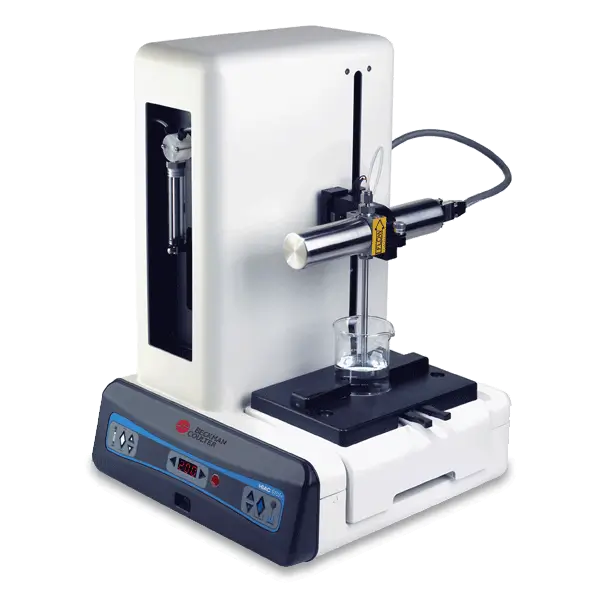
HIAC 9703+
Contador de partículas HIAC 9703+ para control de calidad farmacéutica. Cumplimiento USP 788, 787 y 789 muestras de 1mL, precisión >95%. ¡Solicite presupuesto!
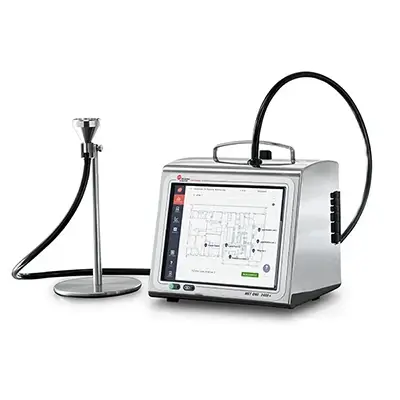
MET ONE 3400+
The innovative particle counter that eliminates workflow errors and simplifies audits. Compliance with ISO 14644, 21 CFR Part 11, and the Annex 1.
Stay in the loop
Get updates, articles and news by email.
Expect news about equipment, services and regulations tailored to your locale.