

Bioprocess scale-up
Bioprocess scale-up transfers a biological process between scales while preserving performance, control and product quality.
Bioprocess scale-up
Bioprocess scale-up transfers a biological process between scales while preserving performance, control and product quality.
What is bioprocess scale-up?
Bioprocess scale-up is the planned transfer of a biological process between systems of different sizes while seeking to preserve productivity, product quality, control and reproducibility. A process commonly progresses from microscale experiments to laboratory, pilot and industrial production scales.
Scale-up involves more than increasing culture-medium volume by a fixed proportion. When bioreactor size changes, mixing, oxygen transfer, heat removal, pressure, circulation time and cellular exposure to shear forces also change. Therefore, a condition that performs well in a microbioreactor may require adjustments before transfer to a larger vessel.
How does bioprocess scale-up work?
The process begins with small-scale characterization. Researchers evaluate cell growth, substrate consumption, product formation, pH, dissolved oxygen, heat generation and the response to different feeding strategies.
Engineering criteria are then selected for the next scale. Common parameters used in bioprocess scale-up include:
- volumetric oxygen mass-transfer coefficient, or kLa;
- power input per unit volume;
- impeller tip speed;
- mixing time;
- oxygen transfer and oxygen uptake rates;
- gas flow per liquid volume;
- carbon dioxide concentration;
- pressure, temperature and heat-removal capacity.
No single criterion is suitable for every bioprocess. Selection depends on the organism, shear sensitivity, oxygen demand, medium viscosity and the product's critical quality attributes.
Stages of bioprocess scale-up
- Microscale development: screening of strains, cell lines, media and cultivation conditions.
- Laboratory confirmation: validation in instrumented bioreactors with additional monitoring and control capabilities.
- Pilot scale: evaluation in equipment with geometry and operating conditions closer to production.
- Industrial scale: transfer to the manufacturing volume using defined operating ranges and procedures.
- Validation: confirmation that the process consistently meets performance and product specifications.
Bioprocess scale-up and scale-down
Scale-up transfers a process to a larger system. Scale-down follows the opposite direction by creating a small-scale model capable of reproducing limitations or variations observed in an industrial bioreactor.
Scale-down models can reproduce gradients in pH, oxygen, nutrients and carbon dioxide while consuming less material. They support deviation investigations, operating-range definition and control-strategy testing before experiments are conducted at manufacturing scale.
Laboratory and industrial applications
Bioprocess scale-up is used in the production of recombinant proteins, antibodies, vaccines, enzymes, antibiotics, probiotic cultures, biomass, organic acids and biofuels. It applies to processes involving bacteria, yeasts, fungi, microalgae and animal cells.
Microbioreactors help identify promising conditions, while benchtop and pilot bioreactors test mixing, gas transfer, feeding and cellular responses at progressively larger working volumes.
What is the main challenge in bioprocess scale-up?
The main challenge is maintaining comparable conditions for cells as vessel geometry and volume change. Mixing, oxygen transfer, heat removal and shear do not increase in the same proportion and may create gradients inside the bioreactor.
Which parameter should be kept constant during scale-up?
There is no universal parameter. Processes with high oxygen demand may prioritize kLa or oxygen-transfer capacity. Shear-sensitive cultures may require limits for power input and impeller tip speed.
Does scale-up guarantee the same result at industrial scale?
Not automatically. Scale-up reduces risk through data, models and validation stages, but each increase in scale must confirm process performance, product quality and operating stability.
Other terms with the letter "B"
View allBioprocess
A bioprocess uses controlled cells, microorganisms or enzymes to produce, transform or purify substances of interest.
Bioreactor: What It Is, How It Works, and How to Choose According to Scale
A bioreactor maintains controlled conditions for cultivating cells or microorganisms and performing biological processes.
Bioanalytical Method Bridging
Bioanalytical Method Bridging demonstrates comparability between a reference bioanalytical method and a modified or transferred condition.
Bioanalytical method bridging
Process aligning legacy and new bioanalytical assays to demonstrate continuity of precision, accuracy, and stability for regulatory submissions, often required when platforms change mid-development.
Referenced products
1 1 product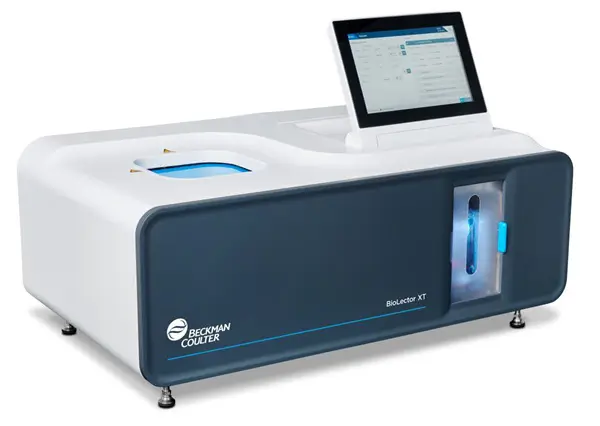
BioLector XT
The BioLector XT Microbioreactor will optimize your process. Precise control of pH, biomass, and DO with patented microfluidic technology and optical sensors.
Stay in the loop
Get updates, articles and news by email.
Expect news about equipment, services and regulations tailored to your locale.