

Oxygen Transfer Rate (OTR)
Oxygen Transfer Rate (OTR) is the rate at which oxygen moves from the gas phase into the liquid phase of a culture or process system.
Oxygen Transfer Rate (OTR)
Oxygen Transfer Rate (OTR) is the rate at which oxygen moves from the gas phase into the liquid phase of a culture or process system.
Oxygen Transfer Rate (OTR) is the rate at which oxygen is transferred from the gas phase into the liquid phase of a system. In fermentation, cell culture, and other aerobic bioprocesses, OTR describes how much oxygen can be supplied to the liquid per unit of time and volume, making it a key parameter for determining whether oxygen transfer can meet the metabolic demand of a culture.
How does Oxygen Transfer Rate work?
Oxygen transfer is driven by the difference between the oxygen concentration at gas-liquid equilibrium and the actual dissolved oxygen concentration in the liquid. In stirred and aerated systems, the efficiency of this transfer depends strongly on gas dispersion, mixing, and the available gas-liquid interfacial area.
A common expression for oxygen transfer is OTR = kLa × (C* − CL). In this relationship, kLa is the volumetric mass transfer coefficient, C* represents the equilibrium or saturation concentration of oxygen in the liquid, and CL is the actual dissolved oxygen concentration.
OTR therefore increases when the mass transfer capacity of the system rises or when the driving force between the equilibrium and actual oxygen concentrations becomes greater.
Why is OTR important in bioprocessing?
Aerobic microorganisms and cells consume oxygen continuously as part of their metabolism. As biomass concentration increases, oxygen demand may increase substantially. In high-density cultures, oxygen supply can therefore become one of the main limitations of the process.
If the Oxygen Transfer Rate is lower than the rate at which the culture consumes oxygen, dissolved oxygen levels may decline. Prolonged oxygen limitation can affect cell growth, substrate utilization, metabolic pathways, biomass production, and the formation of desired metabolites or bioproducts.
What factors influence Oxygen Transfer Rate?
OTR is affected by several operating conditions and physical properties of the system, including:
- agitation speed;
- aeration rate;
- gas composition;
- pressure;
- temperature;
- reactor or vessel geometry;
- working volume;
- medium viscosity and composition;
- gas-liquid interfacial area.
Conditions that promote gas dispersion and renewal of the gas-liquid interface generally improve oxygen transfer, although the magnitude of the effect depends on the specific cultivation system.
OTR, OUR, and dissolved oxygen
Oxygen Transfer Rate is often evaluated together with the Oxygen Uptake Rate (OUR), which represents the rate at which cells or microorganisms consume oxygen. When OTR is sufficient to match OUR, the system can maintain oxygen availability. If OUR becomes greater than OTR, dissolved oxygen typically decreases.
This relationship makes OTR, OUR, and dissolved oxygen useful complementary parameters for interpreting cellular metabolism, identifying oxygen transfer limitations, and optimizing aeration and mixing strategies.
Applications of Oxygen Transfer Rate
OTR is widely used in the development, characterization, optimization, and scale-up of aerobic bioprocesses. Typical applications include microbial fermentation, bacterial and yeast cultivation, mammalian cell culture, biomass production, aerobic enzymatic processes, and process development studies.
It can also be used to compare cultivation vessels, working volumes, agitation conditions, aeration strategies, and reactor configurations. Understanding the oxygen transfer capacity of a system is particularly important when transferring a process between scales, because similar operating conditions do not necessarily produce equivalent oxygen transfer performance.
Frequently asked questions about Oxygen Transfer Rate (OTR)
What is the difference between OTR and dissolved oxygen?
Dissolved oxygen describes the amount or relative availability of oxygen currently present in the liquid, whereas OTR describes how quickly oxygen is being transferred from the gas phase into the liquid.
What is the difference between OTR and OUR?
OTR represents oxygen supply to the liquid, while OUR represents oxygen consumption by cells or microorganisms. Comparing the two helps determine whether oxygen transfer is sufficient to meet biological demand.
How can Oxygen Transfer Rate be increased?
OTR may be increased by changing parameters such as agitation, aeration, gas composition, pressure, or gas-liquid contact. The most appropriate strategy depends on the reactor, medium, and biological system.
Referenced products
3 3 products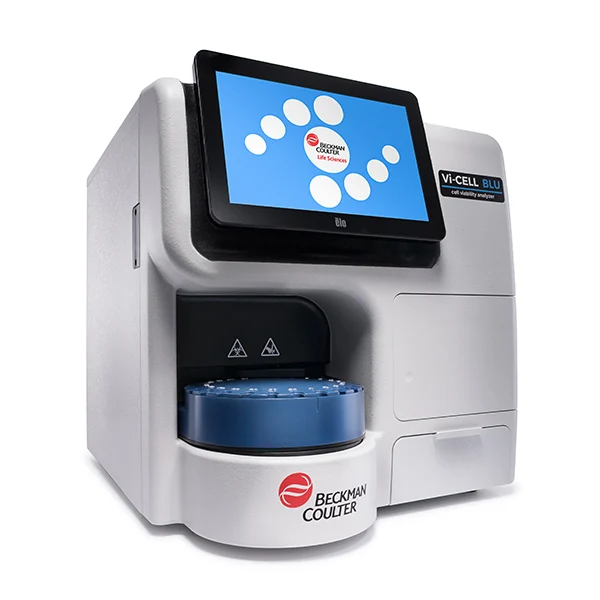
Vi-CELL BLU
The Vi-CELL BLU is the most advanced cell viability analyzer, automating Trypan Blue Exclusion for fast and accurate analysis.
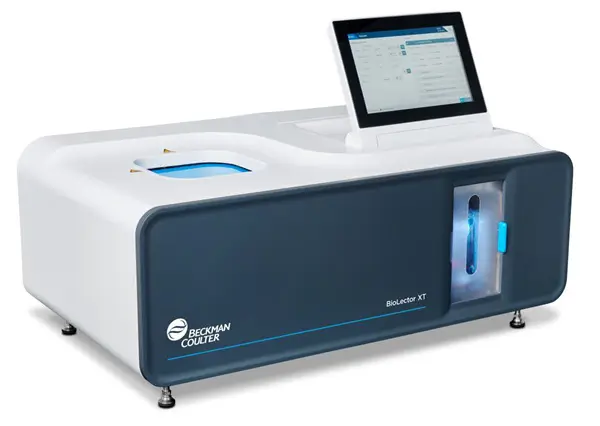
BioLector XT
The BioLector XT Microbioreactor will optimize your process. Precise control of pH, biomass, and DO with patented microfluidic technology and optical sensors.
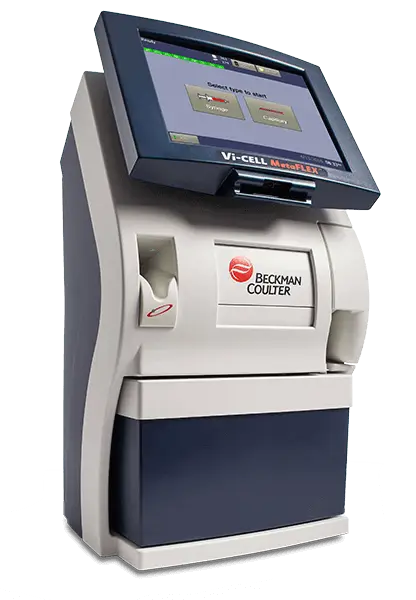
Vi-CELL MetaFLEX
The Vi-CELL MetaFLEX is the bioanalytical analyzer for pH, pO2, pCO2, glucose, lactate, and electrolyte analysis. 65 µL samples in 35s with low maintenance.
Stay in the loop
Get updates, articles and news by email.
Expect news about equipment, services and regulations tailored to your locale.