

Dissolved Oxygen (DO)
Dissolved Oxygen (DO) is the concentration of molecular oxygen present in a liquid and available for biological or chemical processes.
Dissolved Oxygen (DO)
Dissolved Oxygen (DO) is the concentration of molecular oxygen present in a liquid and available for biological or chemical processes.
Dissolved Oxygen (DO) is the amount of molecular oxygen present in a liquid such as water, culture medium, or a process solution. In fermentation, cell culture, and other bioprocesses, DO indicates how much oxygen remains available in the liquid phase to support cellular or microbial metabolism.
How is dissolved oxygen measured?
Oxygen from the gas phase can enter the liquid through mass transfer. In stirred and aerated systems, this transfer is influenced by gas flow, agitation, gas-liquid contact, reactor geometry, and the physical properties of the medium. At the same time, cells, microorganisms, or chemical reactions may consume oxygen continuously.
The dissolved oxygen level observed during a process therefore reflects the balance between oxygen transfer into the liquid and oxygen consumption within the system. In laboratory and industrial bioreactors, DO is commonly monitored continuously using sensors based on electrochemical or optical measurement principles.
Why is dissolved oxygen important in bioprocessing?
Many microorganisms and cell cultures rely on oxygen for aerobic metabolism. As biomass increases, oxygen demand may also rise. If the oxygen consumption rate becomes greater than the system's ability to transfer oxygen into the liquid, oxygen limitation can occur.
Oxygen limitation may affect cell growth, substrate utilization, metabolic pathways, biomass formation, and product formation. For this reason, DO is one of the most important process variables monitored during aerobic fermentation and high-density cultivation.
Applications of dissolved oxygen monitoring
Dissolved oxygen measurement is widely used in scientific laboratories and industrial processes, including:
- microbial fermentation;
- bacterial and yeast cultivation;
- mammalian cell culture;
- bioprocess development and optimization;
- biological wastewater treatment;
- environmental water monitoring;
- cellular respiration and metabolic studies.
Dissolved oxygen, oxygen transfer, and cellular demand
A DO value should always be interpreted in the context of process dynamics. A decrease in dissolved oxygen may result from increased cellular respiration, reduced oxygen transfer, or a combination of both. Conversely, a sudden increase in DO may indicate lower cellular oxygen uptake or an increase in oxygen supply.
In controlled bioreactor systems, the DO signal can also be used as a process control variable. Automated control strategies may adjust agitation speed, airflow, gas composition, or other operating conditions to maintain dissolved oxygen near a selected setpoint.
DO measurements are therefore useful not only for detecting oxygen limitation but also for understanding changes in metabolic activity throughout a cultivation process. When evaluated together with variables such as biomass, pH, substrate concentration, and gas exchange, dissolved oxygen can provide valuable information about the physiological state of a culture.
Frequently asked questions about Dissolved Oxygen (DO)
What does DO mean in bioprocessing?
DO stands for Dissolved Oxygen. In bioprocessing, it describes the amount or relative availability of molecular oxygen in the liquid phase of a culture.
What happens when dissolved oxygen becomes too low?
In aerobic cultures, low DO may indicate that oxygen consumption is approaching or exceeding the oxygen transfer capacity of the system. This can lead to oxygen limitation and changes in cellular metabolism.
What factors affect dissolved oxygen?
Dissolved oxygen is influenced by temperature, pressure, gas composition, agitation, aeration rate, medium properties, reactor design, and the oxygen consumption rate of cells or microorganisms.
Other terms with the letter "D"
View allDissolved oxygen
Dissolved oxygen is the amount of molecular oxygen present in a liquid and available to cells, microorganisms and chemical reactions.
Differential Ultracentrifugation
A technique that separates sample particles through successive centrifugation steps at increasing speeds based on size, mass, and density.
Desorption
Release of previously sorbed (adsorbed or absorbed) molecules from a surface or solid matrix.
Referenced products
1 1 product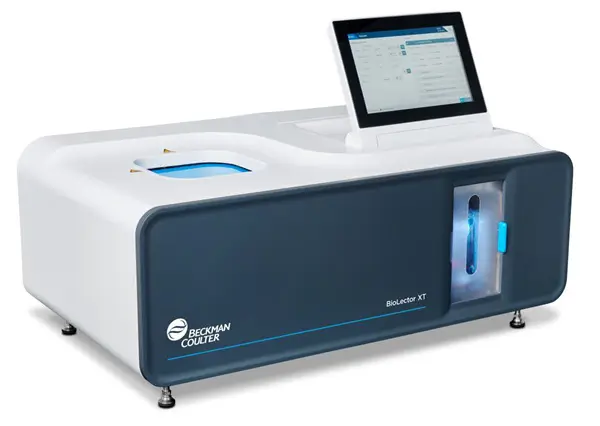
BioLector XT
The BioLector XT Microbioreactor will optimize your process. Precise control of pH, biomass, and DO with patented microfluidic technology and optical sensors.
Stay in the loop
Get updates, articles and news by email.
Expect news about equipment, services and regulations tailored to your locale.