

Parenteral solutions
Parenteral solutions are sterile liquid preparations administered by injection or infusion, bypassing the gastrointestinal tract.
Parenteral solutions
Parenteral solutions are sterile liquid preparations administered by injection or infusion, bypassing the gastrointestinal tract.
Parenteral solutions are sterile liquid pharmaceutical preparations administered by routes that bypass the gastrointestinal tract, primarily through intravenous, intramuscular, or subcutaneous injection or infusion. They may contain active pharmaceutical ingredients, electrolytes, nutrients, or other substances formulated for administration into body tissues or the bloodstream.
What are the main types of parenteral solutions?
Parenteral solutions can be categorized according to their intended use, formulation, administration route, and container volume. Common categories include:
- Small-volume parenterals (SVPs): preparations generally supplied in containers holding 100 mL or less, commonly used for injectable medications.
- Large-volume parenterals (LVPs): preparations generally supplied in containers holding more than 100 mL, often used for intravenous fluid replacement, electrolyte administration, and other infusion therapies.
- Solutions for infusion: preparations intended for controlled administration over a specified period.
- Solutions for injection: liquid formulations administered through an appropriate parenteral route according to their approved use.
These categories may overlap. For example, a large-volume parenteral can also be a solution for intravenous infusion. Not all parenteral preparations are solutions: injectable suspensions, emulsions, and powders requiring reconstitution are also included in the broader category of parenteral dosage forms.
What are the critical quality attributes?
Because parenteral administration bypasses several natural protective barriers, manufacturing and quality control require particular attention to microbiological, chemical, and physical characteristics. Product-specific requirements depend on the formulation, administration route, and applicable pharmacopoeial standards.
- Sterility: compliance with requirements concerning the absence of viable microorganisms.
- Bacterial endotoxins: control of pyrogenic contaminants within limits established for the product and its intended use.
- Visible and subvisible particles: assessment of particulate contamination using applicable acceptance criteria and analytical procedures.
- pH and osmolality: parameters relevant to formulation stability, compatibility, and patient tolerability.
- Assay and impurities: verification of ingredient content and potential degradation products.
- Container closure integrity: demonstration that the packaging system provides the necessary protection throughout the product's shelf life.
How is particulate contamination measured?
Particulate matter in injectable solutions may originate from raw materials, packaging components, processing equipment, interactions between materials, or formulation instability. Particulate contamination testing is therefore an important part of pharmaceutical quality control.
Common analytical approaches include light obscuration particle counting and microscopic particle counting, as appropriate for the product and applicable pharmacopoeial procedure. Visual inspection is used to detect visible particles, while instrumental methods evaluate subvisible particles within their validated measurement ranges.
Sterility testing and particulate matter testing address different quality attributes. A sterile preparation may still contain nonmicrobial particles, and a visually clear solution cannot be assumed to be sterile.
Why does the manufacturing process matter?
Manufacturing may involve formulation preparation, component treatment, filtration where appropriate, filling, container closure, and sterilization. Terminal sterilization is preferred when compatible with the formulation and packaging system. When terminal sterilization is unsuitable, aseptic processing and additional contamination-control measures may be required.
Environmental monitoring, equipment qualification, process validation, and stability studies support the consistent production of solutions meeting their established quality specifications.
Analytical methods must also be suitable for the formulation. For example, the presence of bubbles, formulation components, or other interfering factors may affect particle measurements and require appropriate sample preparation or alternative validated procedures.
Frequently asked questions about parenteral solutions
What is the difference between a parenteral solution and an oral solution?
A parenteral solution is administered by injection or infusion and must meet route-specific requirements, including sterility. An oral solution is administered through the gastrointestinal tract and is subject to different pharmaceutical quality requirements.
Does sterility guarantee that an injectable solution is particle-free?
No. Sterility and particulate contamination are separate quality attributes. Injectable products must meet applicable microbiological requirements and limits for visible and subvisible particulate matter.
Must all parenteral solutions be isotonic?
No. Isotonicity requirements depend on the route of administration, formulation, volume, and clinical conditions. Osmolality must be assessed in relation to product safety and tolerability.
Other terms with the letter "P"
View allPolysorbate
Polysorbate is a nonionic surfactant used to solubilize compounds and stabilize proteins, formulations, and interfaces in aqueous systems.
Poloxamer
Poloxamer is a class of amphiphilic PEO-PPO-PEO triblock copolymers used as surfactants, stabilizers, and micelle-forming polymers.
Referenced products
2 2 products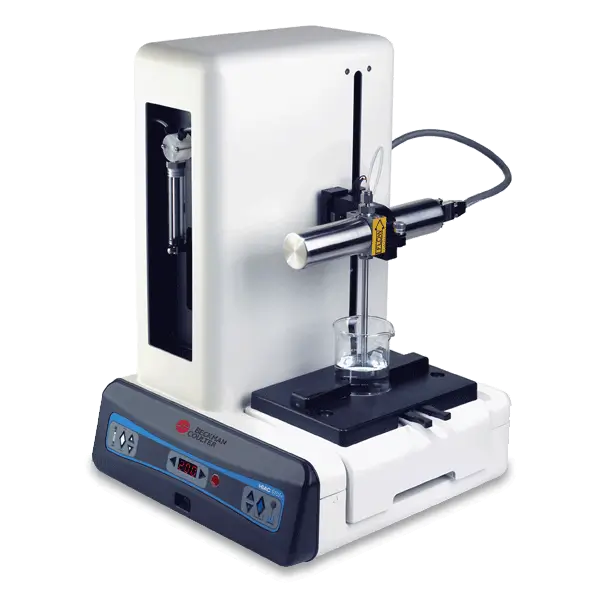
HIAC 9703+
Contador de partículas HIAC 9703+ para control de calidad farmacéutica. Cumplimiento USP 788, 787 y 789 muestras de 1mL, precisión >95%. ¡Solicite presupuesto!
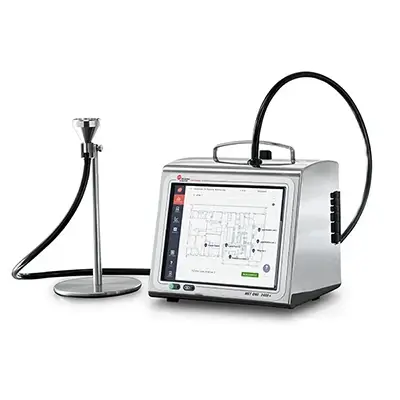
MET ONE 3400+
The innovative particle counter that eliminates workflow errors and simplifies audits. Compliance with ISO 14644, 21 CFR Part 11, and the Annex 1.
Stay in the loop
Get updates, articles and news by email.
Expect news about equipment, services and regulations tailored to your locale.