

Microtiter plates
Microtiter plates are multiwell laboratory vessels used to prepare, cultivate and analyze many samples in parallel.
Microtiter plates
Microtiter plates are multiwell laboratory vessels used to prepare, cultivate and analyze many samples in parallel.
What are microtiter plates?
Microtiter plates are laboratory vessels containing multiple wells arranged in rows and columns. They are used to prepare, cultivate, store or analyze many samples simultaneously. Also known as microplates, they reduce reagent volumes and provide an organized format for parallel assays.
Microtiter plates may contain 6, 12, 24, 48, 96, 384 or 1,536 wells. The 96-well plate is one of the most widely used formats. Plates with fewer wells provide a larger working volume per sample, while high-density formats support high-throughput screening and automated workflows.
How do microtiter plates work?
Each well acts as a small experimental vessel. Samples, cells, microorganisms, culture media and reagents can be distributed manually or with automated liquid-handling systems. The row-and-column layout makes it easier to include controls, replicates and concentration gradients.
After preparation, the plate may be incubated, shaken, sealed or placed in a microplate reader. Depending on the assay and instrument, microplates can support measurements of:
- absorbance and optical density;
- fluorescence and luminescence;
- pH and dissolved oxygen;
- biomass and microbial growth;
- enzyme activity;
- cell viability and proliferation.
Standardized ANSI/SLAS dimensions improve compatibility with readers, washers, incubators, liquid handlers and microbioreactors. However, users must confirm that plate height, well bottom, lid and construction material are compatible with the intended equipment.
Microtiter plate materials and well formats
Microtiter plates may be manufactured from polystyrene, polypropylene and other polymers. Polystyrene is widely used for optical assays and cell culture. Polypropylene provides greater chemical resistance and is often selected for sample storage and procedures involving compatible solvents.
Wells may have flat, round, conical or specialized bottoms. Flat bottoms support many optical readings and adherent cell cultures. Round and conical bottoms help concentrate and recover samples. Microbioreactor plates may use specialized well geometries designed to improve mixing and oxygen transfer during shaking.
Transparent, white, black and optical-bottom plates are also available. White plates reflect luminescent signals, whereas black plates help reduce optical crosstalk during fluorescence assays.
Laboratory and industrial applications
Microtiter plates are used in ELISA, cell culture, microbiology, drug development, enzyme assays, molecular biology, toxicology and quality control. Biotechnology laboratories use them for strain screening, culture-medium optimization and bioprocess development.
In microbioreactors, plates equipped with optical sensors can monitor biomass, fluorescence, pH and dissolved oxygen. Microfluidic models may also contain reservoirs and microvalves for feeding and pH control in parallel cultivations.
Considerations when using microplates
- confirm the chemical resistance of the plate material;
- select a well bottom compatible with the reading method;
- reduce evaporation with suitable lids or sealing films;
- avoid bubbles during optical measurements;
- consider possible edge effects;
- use volumes within the recommended range;
- verify sterility and surface treatment requirements.
What is the difference between a microplate and a microtiter plate?
The terms are generally used interchangeably. Microtiter plate is the traditional technical term, while microplate is a common abbreviated name used in laboratories, publications and equipment catalogs.
How should the number of wells be selected?
Selection depends on sample volume, number of conditions and instrument compatibility. Low-density plates offer larger volumes, while 96-, 384- and 1,536-well formats increase parallel analysis capacity.
Can microtiter plates be reused?
Most microtiter plates are designed for single use, particularly in cell culture and contamination-sensitive assays. Reuse may change surface characteristics, affect optical measurements and cause cross-contamination.
Other terms with the letter "M"
View allMetalworking fluids
Metalworking fluids are liquids or gases used in machining to cool, lubricate, and remove chips, extending tool life and improving workpiece quality.
MOF (Metal-Organic Framework)
A MOF is a class of porous crystalline material built from metal ions or clusters linked by organic ligands, exhibiting permanent porosity.
monoclonal antibodies
Monoclonal antibodies are immunoglobulins produced from a single cell clone and designed to recognize a specific molecular target.
Referenced products
1 1 product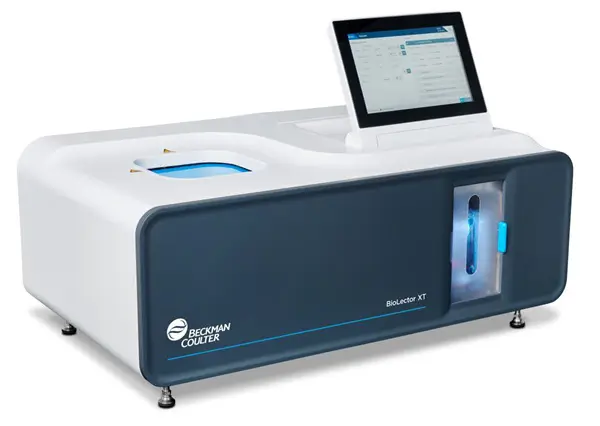
BioLector XT
The BioLector XT Microbioreactor will optimize your process. Precise control of pH, biomass, and DO with patented microfluidic technology and optical sensors.
Stay in the loop
Get updates, articles and news by email.
Expect news about equipment, services and regulations tailored to your locale.