

Reactive Oxygen Species (ROS)
Reactive Oxygen Species (ROS) are oxygen-derived molecules and radicals that participate in cellular oxidation and redox signaling.
Reactive Oxygen Species (ROS)
Reactive Oxygen Species (ROS) are oxygen-derived molecules and radicals that participate in cellular oxidation and redox signaling.
Reactive Oxygen Species (ROS) are oxygen-derived molecules and radicals with relatively high chemical reactivity. They can be generated naturally during cellular metabolism and can also increase in response to environmental conditions, chemical exposure, or physiological stress. At controlled levels, ROS participate in normal cell signaling, while excessive or poorly regulated ROS production can contribute to oxidative stress and damage cellular components.
What are the main Reactive Oxygen Species?
ROS is a broad term that includes several chemically distinct species. Common examples include superoxide, hydrogen peroxide, and the hydroxyl radical. These compounds differ in stability, lifetime, diffusion capacity, and chemical reactivity.
Because different ROS behave differently, measuring total oxidative activity does not necessarily identify which specific reactive species is responsible for an observed biological effect. Their location and kinetics are also important for interpretation.
How are ROS generated in cells?
Reactive Oxygen Species can arise as normal by-products of aerobic metabolism. Mitochondria are a major intracellular source, particularly through electron transfer reactions associated with cellular respiration. ROS may also be generated by oxidase enzymes, peroxisomal reactions, metal-dependent chemistry, and cellular responses to external stimuli.
In cultured cells and microorganisms, ROS production can change with metabolic activity, oxygen availability, nutrient conditions, chemical exposure, and other forms of cellular stress.
What is the relationship between ROS and oxidative stress?
Oxidative stress develops when oxidant production exceeds the ability of a biological system to neutralize reactive species or repair associated damage. Cells maintain enzymatic and non-enzymatic antioxidant systems that help regulate ROS and preserve redox balance.
When this balance is disrupted, reactive oxygen species may react with lipids, proteins, carbohydrates, and nucleic acids. For this reason, ROS levels should be interpreted together with antioxidant capacity, cell type, cellular compartment, metabolic state, and experimental conditions.
ROS as signaling molecules
Reactive Oxygen Species are not exclusively damaging compounds. At regulated concentrations, certain ROS act as signaling intermediates involved in cell proliferation, differentiation, immune responses, metabolic adaptation, and responses to environmental stress.
The biological outcome of ROS exposure therefore depends on the specific reactive species, concentration, duration, cellular location, and the ability of the cell to maintain redox homeostasis.
How are Reactive Oxygen Species measured in the laboratory?
ROS analysis may involve fluorescent probes, biochemical assays, spectroscopic approaches, and methods that detect oxidation products. The appropriate technique depends on the reactive species of interest, the biological sample, and the experimental question.
An important limitation is that many commonly used assays are not completely specific for a single ROS. Fluorescent probes may also be influenced by light exposure, metal ions, redox conditions, probe localization, or other components of the sample. Proper controls and careful interpretation are therefore essential.
Applications of ROS analysis
Reactive Oxygen Species are studied across a wide range of scientific fields, including:
- cell and molecular biology;
- oxidative stress research;
- mitochondrial metabolism and function;
- microbiology and bioprocessing;
- toxicology;
- pharmacology and compound screening;
- cellular aging research;
- biomaterial and cell interaction studies.
Frequently asked questions about Reactive Oxygen Species (ROS)
Are Reactive Oxygen Species always harmful?
No. At controlled concentrations, ROS have important physiological roles in cellular signaling. Harmful effects are more likely when ROS production exceeds antioxidant and repair capacity.
What is the difference between ROS and oxidative stress?
ROS are reactive oxygen-derived chemical species. Oxidative stress is the biological condition that develops when oxidant activity exceeds the system's ability to maintain redox balance.
How can ROS be measured in cells?
ROS can be investigated using fluorescent probes, biochemical assays, spectroscopy, and measurements of oxidation products. Method selection depends on the target species, sample, and required specificity.
Referenced products
4 4 products
Vi-CELL BLU
The Vi-CELL BLU is the most advanced cell viability analyzer, automating Trypan Blue Exclusion for fast and accurate analysis.

BioLector XT
The BioLector XT Microbioreactor will optimize your process. Precise control of pH, biomass, and DO with patented microfluidic technology and optical sensors.
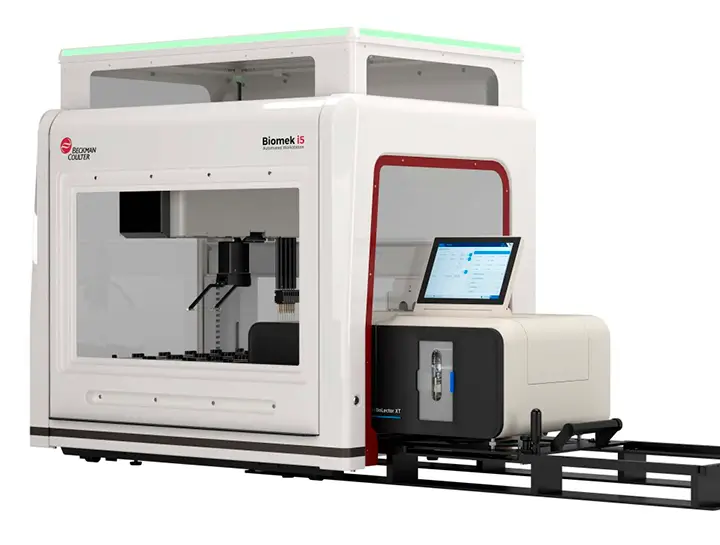
BioLector XT & Biomek i5
BioLector XT Microbioreactor with Biomek i5: Automation of microbial cultivation with real-time measurements. Reduce errors and increase productivity.

Vi-CELL MetaFLEX
The Vi-CELL MetaFLEX is the bioanalytical analyzer for pH, pO2, pCO2, glucose, lactate, and electrolyte analysis. 65 µL samples in 35s with low maintenance.
Stay in the loop
Get updates, articles and news by email.
Expect news about equipment, services and regulations tailored to your locale.