

Dissolved oxygen
Dissolved oxygen is the amount of molecular oxygen present in a liquid and available to cells, microorganisms and chemical reactions.
Dissolved oxygen
Dissolved oxygen is the amount of molecular oxygen present in a liquid and available to cells, microorganisms and chemical reactions.
What is dissolved oxygen?
Dissolved oxygen is the amount of molecular oxygen present in a liquid and available to cells, microorganisms and chemical reactions. In bioprocessing, it indicates the balance between oxygen transferred from the gas phase into the culture medium and oxygen consumed by cellular metabolism.
Dissolved oxygen is commonly abbreviated as DO. Its concentration may be reported in milligrams per liter, parts per million or percentage of saturation. Bioreactors and microbioreactors frequently use percentage of saturation to monitor and control aerobic cultivation processes.
How is dissolved oxygen measured?
Dissolved oxygen can be measured with electrochemical or optical sensors. Electrochemical probes, including polarographic sensors, measure an electrical current associated with oxygen reduction at an electrode. These probes may consume a small amount of oxygen during measurement and require attention to membranes and electrolytes.
Optical sensors, also known as optodes, use a luminescent material whose response changes in the presence of oxygen. They do not consume oxygen during measurement and can be integrated into microtiter plates, flasks, bioreactors and other cultivation vessels.
Sensor selection should consider measurement range, response time, temperature, pressure, sterilization requirements and compatibility with the culture medium. Correct calibration and temperature compensation are essential for reliable results.
What affects dissolved oxygen concentration?
Oxygen solubility and its transfer into a liquid are influenced by several factors:
- system temperature and pressure;
- composition and flow rate of the supplied gas;
- agitation speed and impeller design;
- bubble size and distribution;
- culture-medium viscosity and composition;
- cell concentration and metabolic activity;
- bioreactor geometry and working volume.
Increasing temperature generally reduces oxygen solubility. During cultivation, increasing biomass may rapidly raise oxygen demand and cause oxygen limitation, even if aeration and agitation remain unchanged.
Dissolved oxygen control in bioreactors
When the measured value falls below the programmed setpoint, a bioreactor control system may increase agitation, raise airflow, enrich the inlet gas with oxygen or adjust pressure. This sequence of coordinated responses is commonly called cascade control.
The goal is not necessarily to maintain the highest possible DO value, but to keep it within a range appropriate for the organism and process. Insufficient oxygen can limit growth or alter product formation. Excessive oxygen may increase oxidative stress, promote foam and raise operating costs.
Laboratory and industrial applications
Dissolved oxygen monitoring is used in microbial fermentation, cell culture, recombinant protein production, vaccine development, wastewater treatment, aquaculture, water-quality control and environmental research.
In microbioreactors, parallel DO measurements support comparisons among strains, media and feeding strategies. At industrial scale, this parameter helps control oxygen transfer and identify changes in cell metabolism or process performance.
What is the difference between dissolved oxygen and oxygen concentration in the gas?
Gas-phase oxygen describes the composition of the atmosphere supplied to the system. Dissolved oxygen indicates how much oxygen is effectively available in the liquid. The values are related, but mass transfer and cellular consumption also influence the measured DO.
What does 100% oxygen saturation mean?
It means that the liquid has reached equilibrium with a reference condition defined during calibration. It does not mean that the liquid consists of pure oxygen. The corresponding concentration varies with temperature, pressure, salinity and gas composition.
Why does dissolved oxygen decrease during cultivation?
DO usually decreases when cellular oxygen consumption rises faster than oxygen transfer into the medium. A decline may also indicate changes in agitation, aeration, viscosity or equipment performance.
Other terms with the letter "D"
View allDifferential Ultracentrifugation
A technique that separates sample particles through successive centrifugation steps at increasing speeds based on size, mass, and density.
Dissolved Oxygen (DO)
Dissolved Oxygen (DO) is the concentration of molecular oxygen present in a liquid and available for biological or chemical processes.
Desorption
Release of previously sorbed (adsorbed or absorbed) molecules from a surface or solid matrix.
Referenced products
1 1 product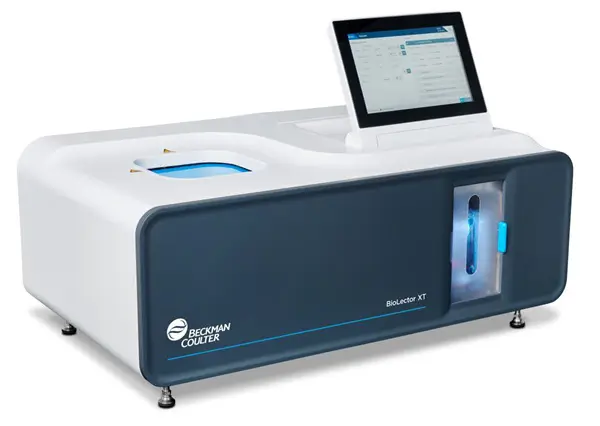
BioLector XT
The BioLector XT Microbioreactor will optimize your process. Precise control of pH, biomass, and DO with patented microfluidic technology and optical sensors.
Stay in the loop
Get updates, articles and news by email.
Expect news about equipment, services and regulations tailored to your locale.