

BioArgentina 2026 will take place on November 11 in San Carlos de Bariloche, Río Negro Province.
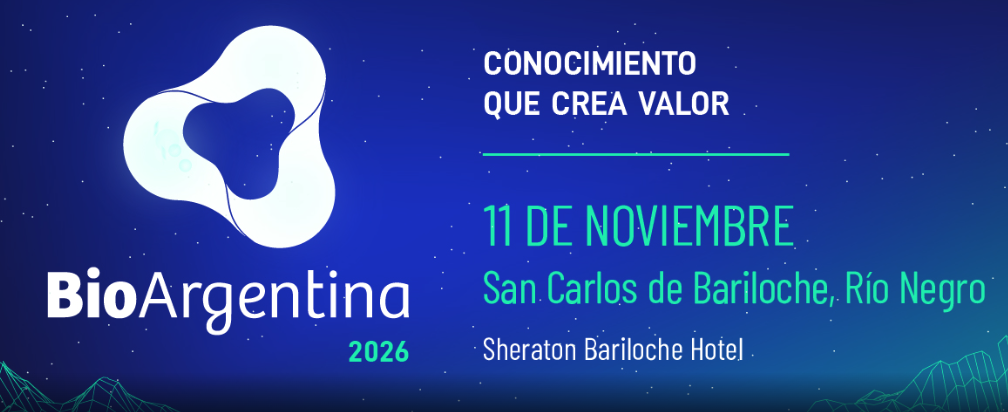
The 13th edition of the event organized by the Argentine Chamber of Biotechnology (CAB) will bring together researchers, entrepreneurs, startups, companies, and investors to address one of the sector's main challenges: transforming scientific knowledge into technological developments, products, and market opportunities.
Under the theme “Knowledge That Creates Value,” the event will take place in Patagonia for the first time, featuring conferences, expert panels, and the BioBusiness Matchmaking Sessions (BioRondas de Negocios). Participation will be free of charge, with advance registration required and limited availability.
When and where will BioArgentina 2026 take place?
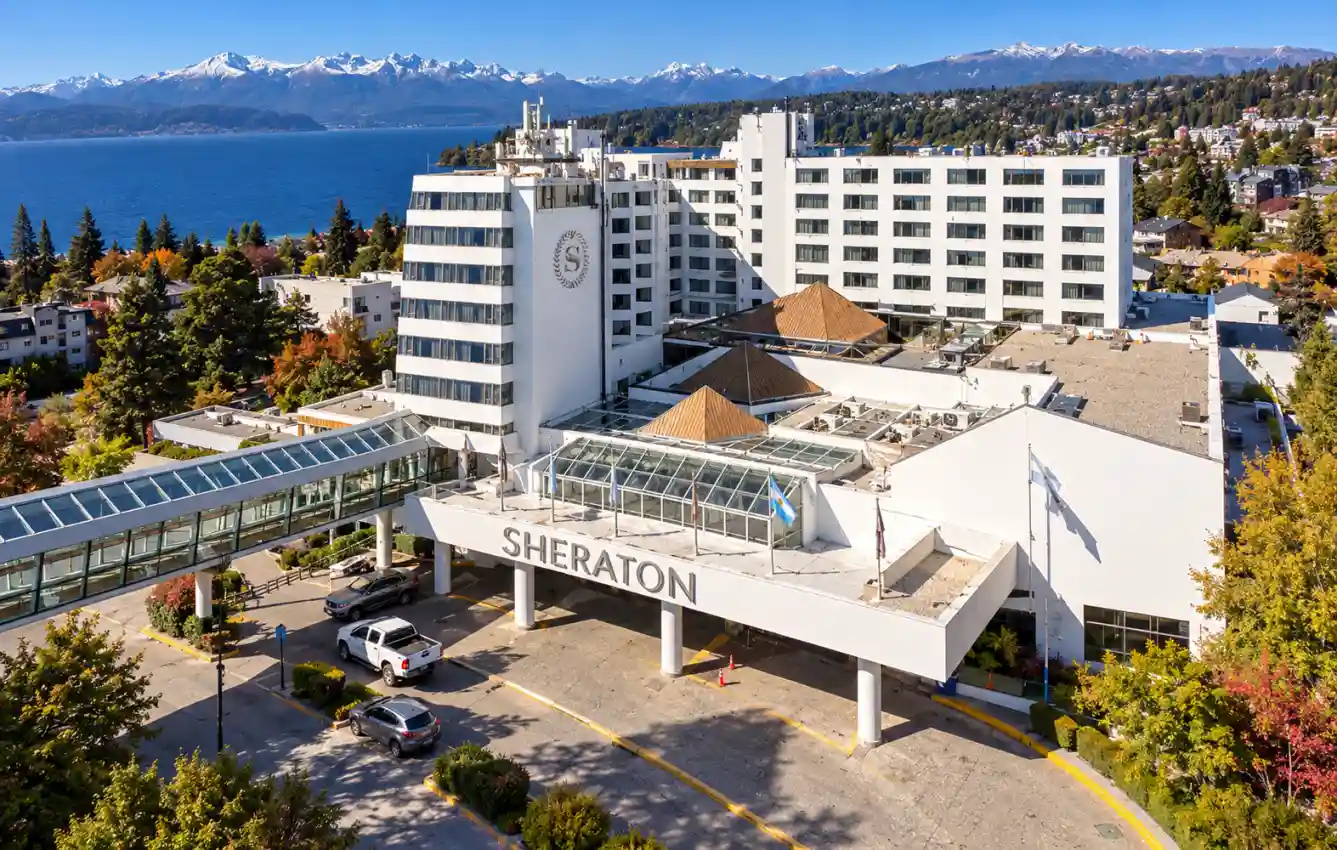
The next edition of BioArgentina will take place on Wednesday, November 11, 2026, at the Sheraton Bariloche Hotel in San Carlos de Bariloche, Río Negro.
| Information | Details |
|---|---|
| Event | BioArgentina 2026 |
| Edition | 13th |
| Date | November 11, 2026 Add to Google Calendar |
| Venue | Sheraton Bariloche Hotel |
| City | San Carlos de Bariloche, Río Negro |
| Organizer | Argentine Chamber of Biotechnology (CAB) |
| Theme | Knowledge That Creates Value |
| Check-in | From 8:30 AM |
| BioBusiness Matchmaking Sessions | 2:30 PM to 5:30 PM |
| Registration | Free, with limited availability |
| Official website | www.bioargentina.com.ar |
The choice of Bariloche marks a new development for the event, which aims to increase the visibility of scientific, technological, and business capabilities across different regions of Argentina.
What is BioArgentina and what is the objective of the 2026 edition?
BioArgentina is an event promoted by the Argentine Chamber of Biotechnology to encourage connections between scientific research, technology ventures, and industry.
Its purpose is to facilitate the exchange of experiences and create connections between those who generate knowledge and those with the capabilities to transform it into productive solutions.
In 2026, the event places particular emphasis on technology transfer, the creation of science-based companies, and the challenges biotechnology projects face as they move from the laboratory to the market.
Why will Bariloche host BioArgentina 2026?
Patagonia is home to scientific institutions, research groups, and technology ventures that contribute to the development of Argentine biotechnology.
Holding BioArgentina in Bariloche aims to highlight these regional capabilities and expand opportunities for collaboration between the scientific community and the productive sector.
One of the event's central sessions, called Patagonia Biotech, will be specifically dedicated to presenting research, innovation, and entrepreneurship experiences developed in the region.
BioArgentina 2026 program: conferences, panels, and activities
The announced program includes presentations by researchers, business leaders, and technology transfer specialists.
The sessions will address regional biotechnology development, the entry of startups into the market, and strategies for transforming scientific results into products and services.
Patagonia Biotech: scientific innovation and regional ventures
The Patagonia Biotech panel will bring together representatives of scientific and business initiatives connected to the region.
Announced participants include:
-
Diego Libkind, from the Andean Patagonian Institute of Biological and Geoenvironmental Technologies (IPATEC).
-
Tamara Rubilar, from Promarine Antioxidants.
-
Ana Clara Mignaqui, from Amplicon Bricks.
The discussion will be moderated by Graciela Ciccia, executive director of the Argentine Chamber of Biotechnology.
The panel will provide insights into technology development experiences and examine how regional scientific capabilities can contribute to the creation of new companies and industrial applications.
Technology transfer: lessons from the Weizmann model
The international conference will be presented by Elik Chapnik, PhD, CEO of Yeda, the technology transfer organization of the Weizmann Institute of Science in Israel.
His presentation will focus on transforming scientific knowledge into innovation and market opportunities.
Technology transfer is a fundamental stage for many biotechnology projects. Beyond demonstrating that a technology works, it is necessary to evaluate its reproducibility, scalability, intellectual property, economic feasibility, and suitability for market needs.
The experience of organizations specializing in technology transfer provides useful references for discussing how to connect research results with companies and investors.
The leap: when a startup reaches the market
Another announced panel will address the transition from scientific development to commercial activity.
The program includes experiences from Beeflow, NAT4BIO, and Antarka, ventures associated with biotechnology innovation.
For a science-based startup, reaching the market involves overcoming challenges that extend beyond initial research.
These include technology validation, obtaining reproducible results, developing production processes, securing financing, and adapting solutions to the needs of potential customers.
The exchange of experiences will provide an opportunity to explore different paths toward business growth.
Knowledge That Creates Value: biotechnology and industry
The Knowledge That Creates Value panel will feature representatives of companies connected to Argentina's biotechnology sector.
Announced participants include:
-
Fernando Lobos, from Sinergium Biotech.
-
Leonardo Marraffini, from Keclon.
-
Guillermo Rojkin, from Wiener lab.
-
Jorge Winokur, from Vetanco.
The panel will be moderated by Christian Lisi, from Biogénesis Bagó.
The participation of these companies will bring industrial perspectives to the discussion on innovation, technology development, and value creation.
BioBusiness Matchmaking Sessions 2026: opportunities for companies and researchers

The BioBusiness Matchmaking Sessions (BioRondas de Negocios) will take place from 2:30 PM to 5:30 PM and will be one of the event's main networking opportunities.
The activity consists of individually scheduled meetings between companies, startups, researchers, entrepreneurs, and investors.
The objective is to facilitate contact between organizations with complementary capabilities, interests, or needs.
These meetings can help identify opportunities for scientific collaboration, joint technology development, knowledge transfer, and new business initiatives.
For researchers, they provide an opportunity to present potential applications of their developments. For companies, they offer a setting to discover emerging technologies and establish contacts with specialized teams.
Participation requires advance registration and is subject to availability.
What technological challenges does Argentine biotechnology face?
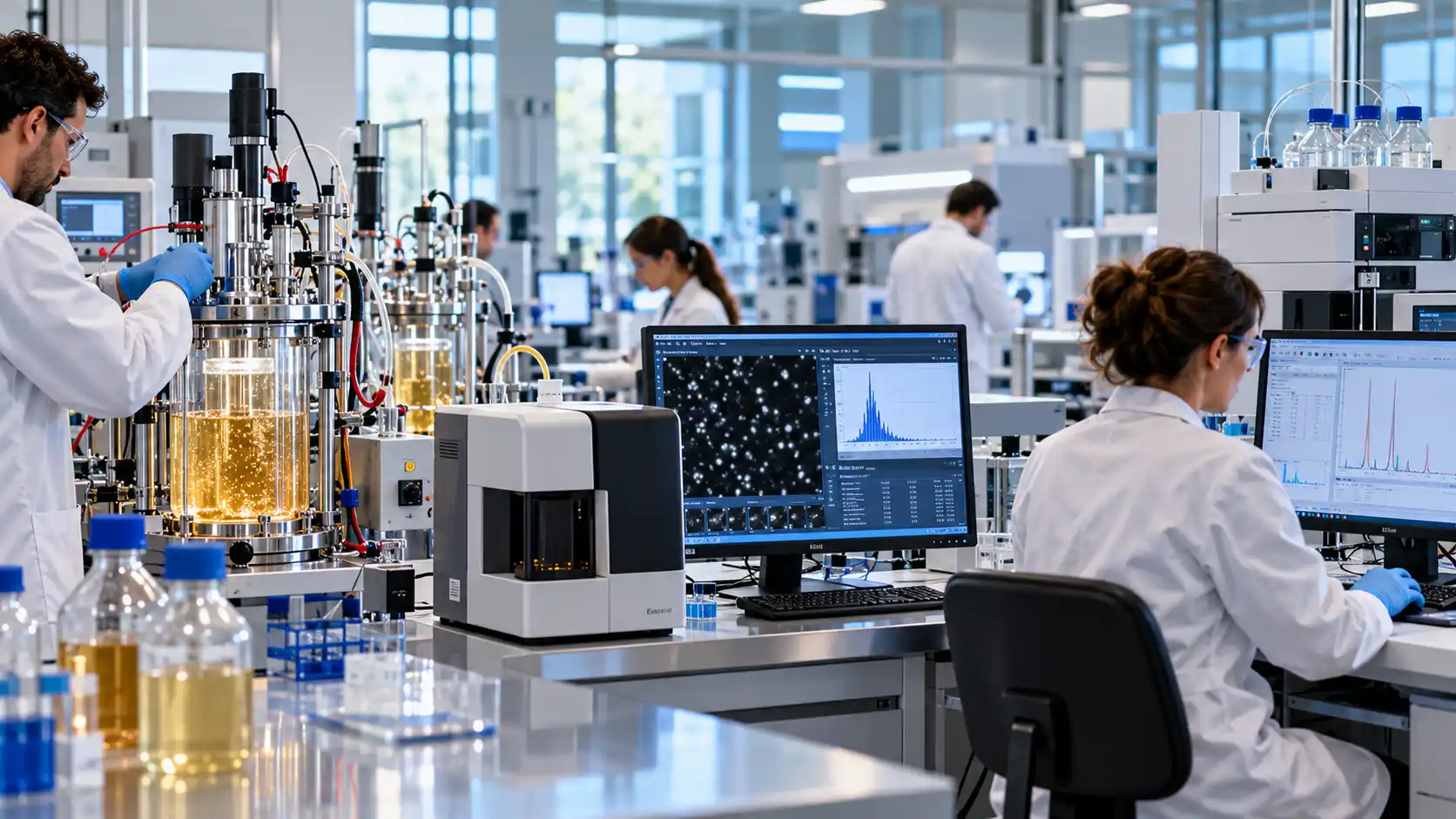
One of the central themes of BioArgentina 2026 is the transformation of scientific knowledge into practical applications.
This process also presents technical challenges related to experimental development, the characterization of biological materials, process optimization, and quality control.
Although needs vary depending on the sector and application, certain analytical and technological areas become particularly important as research advances toward production development stages.
Bioprocess optimization and scale-up
Bioprocesses involving microorganisms or cell cultures require controlled conditions to achieve reproducible results.
Variables such as temperature, pH, dissolved oxygen, nutrient availability, and feeding strategies can influence cell growth and the formation of the desired product.
During bioprocess development, one of the challenges is transferring results obtained at a small scale to larger-capacity systems.
Changes in oxygen transfer, mixing, and nutrient availability can alter culture behavior. Therefore, bioprocess scale-up involves more than simply increasing the operating volume.
Parallel cultivation platforms such as BioLector XT make it possible to study multiple experimental conditions at a small scale and obtain useful information for selecting cultivation strategies.
Likewise, bioreactors with operational parameter control enable researchers to investigate process conditions and progress toward more controlled production systems.
These technologies are relevant to research and development activities in industrial biotechnology, microbial fermentation, and the production of biologically derived compounds.
Characterization of nanoparticles and biological products
Physicochemical characterization represents another important challenge for different biotechnology applications.
In research involving extracellular vesicles, for example, it is necessary to evaluate properties such as particle size distribution and concentration.
These measurements help describe samples and compare results obtained under different experimental conditions.
The nanoparticle tracking analysis technique, known as NTA (Nanoparticle Tracking Analysis), makes it possible to study the Brownian motion of particles in suspension and estimate their hydrodynamic size distribution.
Instruments such as ZetaView Evolution use this technique to characterize particles within their operating ranges and conditions.
However, NTA measurements alone cannot confirm the biological identity of detected particles. In extracellular vesicle studies, they must be complemented by other characterization strategies and appropriate controls.
The selection of analytical techniques depends on the nature of the sample, the objectives of the study, and the attributes that need to be measured.
In Argentina, the GAVE 2026 meeting also reflects scientific interest in extracellular vesicle characterization.
Quality control and analytical reproducibility
As biotechnology development progresses toward industrial applications, establishing consistent analytical procedures becomes increasingly important.
Reproducibility requires controlling experimental conditions, documenting the methods used, and understanding the sources of measurement variability.
In products and processes where applicable, particle control, material characterization, and environmental condition monitoring may form part of a quality control strategy.
Specific requirements depend on the type of product, its intended use, and the applicable regulatory framework.
Therefore, the selection of analytical instruments must begin with a clearly defined measurement need, considering method performance, limitations, and the corresponding acceptance criteria.
How to register for BioArgentina 2026
Participation in BioArgentina 2026 will be free of charge, although advance registration is required due to the event's limited capacity.
To review participation conditions and register, interested individuals should visit the official website:
https://www.bioargentina.com.ar
Information about the program, participants, and registration procedures is available there.
Those wishing to participate in the BioBusiness Matchmaking Sessions should also check the specific requirements for registration and meeting coordination.
It is recommended to check for possible agenda updates before traveling to Bariloche.
Frequently asked questions about BioArgentina 2026
When will BioArgentina 2026 take place?
BioArgentina 2026 will take place on Wednesday, November 11, 2026, in San Carlos de Bariloche, Río Negro Province, Argentina.
Where will BioArgentina 2026 be held?
The 13th edition will be held at the Sheraton Bariloche Hotel in San Carlos de Bariloche.
Is registration for BioArgentina 2026 free?
Yes. The Argentine Chamber of Biotechnology announced free participation, with advance registration required and limited availability.
Who organizes BioArgentina 2026?
The event is organized by the Argentine Chamber of Biotechnology (CAB), an organization that promotes connections between companies, startups, research, and biotechnology innovation.
Who can participate in BioArgentina 2026?
The event is aimed at researchers, scientists, students, entrepreneurs, startups, companies, investors, and other participants connected to biotechnology.
What are the BioBusiness Matchmaking Sessions?
They are individually scheduled meetings designed to connect companies, researchers, startups, and investors to explore opportunities for collaboration, technology transfer, and project development.
How can I participate in the BioBusiness Matchmaking Sessions?
Interested participants should check the specific registration procedure through the official BioArgentina website. Participation is subject to advance registration and availability.
BioArgentina 2026 and the future of Argentine biotechnology
The arrival of BioArgentina in Patagonia represents an opportunity to highlight scientific and technological projects developed across different regions of the country.
The 2026 program addresses a central question for biotechnology: how to transform research results into solutions that can be developed, validated, and brought to market.
Throughout this process, connections between universities, scientific centers, startups, and companies are just as important as the availability of technical capabilities to investigate, characterize, and develop new processes.
BioArgentina 2026 will provide a setting to exchange experiences, discover initiatives, and establish contacts that may contribute to the development of Argentina's biotechnology ecosystem.
To check the updated program and register, visit the official BioArgentina 2026 website: https://www.bioargentina.com.ar