Parenteral Solutions in Argentina: What Changes Under ANMAT Regulation 5146/2026?
ANMAT Regulation 5146/2026 clarifies the requirements for closed manufacturing systems used in large-volume parenteral solutions. Learn how these requirements relate to pharmaceutical quality control and subvisible particle testing.
Parenteral Solutions in Argentina: What Changes Under ANMAT Regulation 5146/2026?
19 Oct 2026 6 min read
ANMAT Regulation 5146/2026 clarifies the requirements for closed manufacturing systems used in large-volume parenteral solutions. Learn how these requirements relate to pharmaceutical quality control and subvisible particle testing.
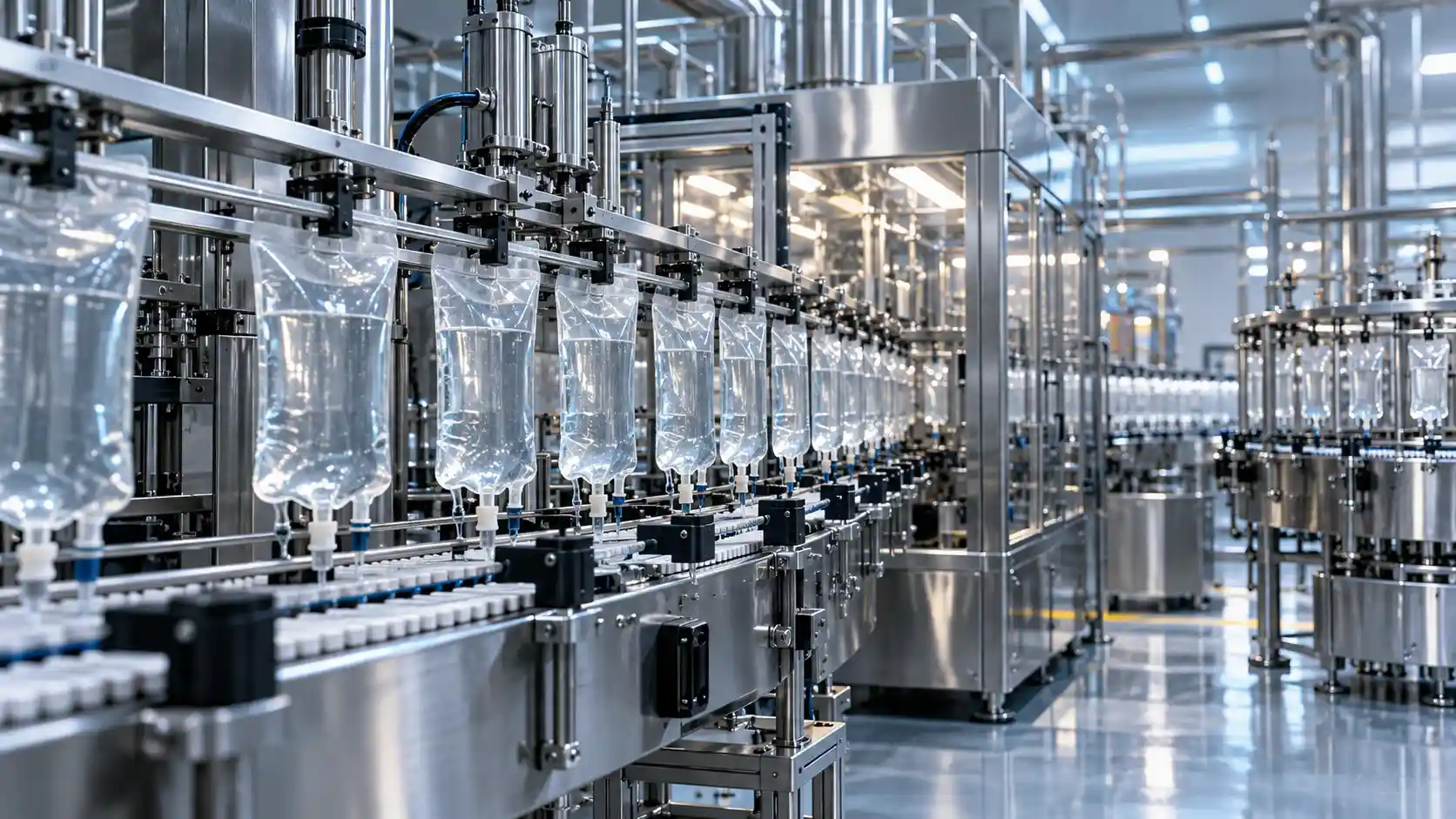
Manufacturing large-volume parenteral solutions in Argentina is drawing attention. Companies in the sector have announced investments in production lines. At the same time, ANMAT published a regulation clarifying what constitutes a closed system in this type of manufacturing.
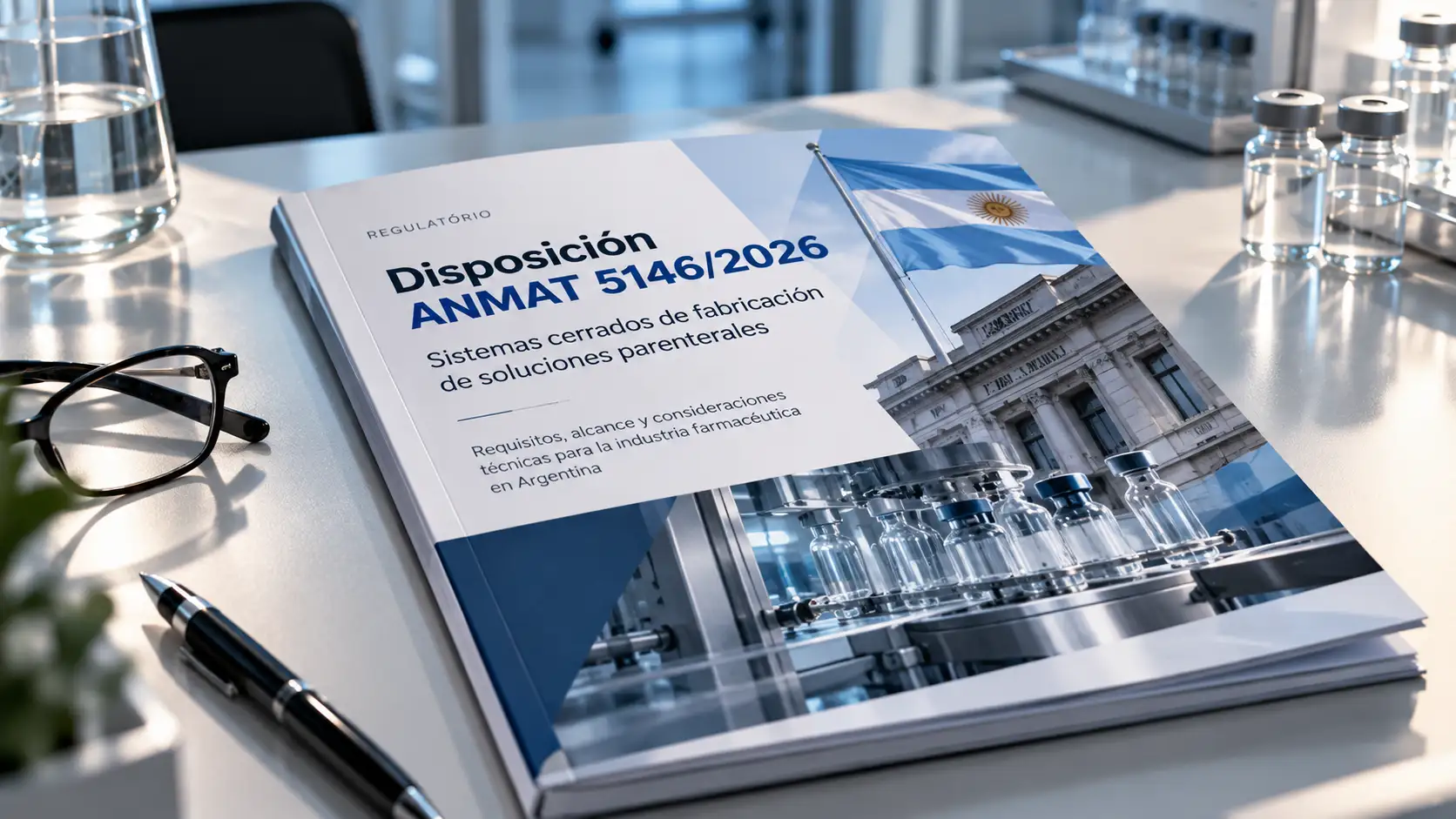
ANMAT Regulation 5146/2026, published on August 18, 2026, did not introduce the requirement to use closed systems. That requirement was already established by ANMAT Regulation 11857/2017. The 2026 measure details the criteria used to classify these processes.
There is also an important distinction: manufacturing conditions and quality control tests serve different purposes. Understanding the revised regulatory language therefore does not eliminate the need to assess the requirements applicable to the medicinal product.
1. Announced investments in Argentine parenteral solution production
On October 13, 2026, the newspaper El Cronista reported on projects to expand the country's production of large-volume parenteral solutions.
According to the report, Laboratorios Jayor announced US$19.3 million for a new line in Pilar. Bina Pharma reported US$10 million for a second line in Hudson, Berazategui. The article also described a production expansion by Norgreen in Mar del Plata.
These figures represent publicly announced investments. They do not, by themselves, establish that the lines have begun operating or that quality control instruments have been purchased.
2. What does ANMAT Regulation 5146/2026 establish?
Regulation 5146/2026, published in Argentina's Official Gazette, replaces Article 1 of ANMAT Regulation 11857/2017. It maintains the requirement to manufacture large-volume parenteral solutions using a closed system and clarifies the conditions defining that process.
How does the regulation define a closed system?
Under Article 1, formation of the primary container, filling and sealing must take place without exposing the product to the environment during critical stages. This condition must be maintained until terminal sterilization.
Article 2 expressly excludes processes involving a preformed primary container from this definition. Merely using a closed container is therefore insufficient to qualify as a closed system under the regulation.
When does the regulation take effect, and how does compliance adaptation work?
Article 4 provides for entry into force 180 calendar days after publication on August 18, 2026. The change was therefore not yet in force when this article was written in October 2026.
Article 3 also allows marketing authorization holders using other technologies to request approval of an adaptation plan. The deadlines and conditions depend on the health authority. Approval is not automatic.
3. Closed systems and quality control: what is the difference?
The closed-system requirement concerns product exposure to the environment during critical manufacturing stages. ANMAT associates this requirement with reducing the risk of microbiological contamination.
However, medicinal product compliance also depends on applicable specifications and tests. ANMAT Regulation 4159/2023 establishes Good Manufacturing Practice requirements. The Argentine Pharmacopoeia, in turn, describes analytical procedures for different product characteristics.
Regulation 5146/2026 should therefore not be described as establishing new limits for subvisible particles. It addresses the definition of manufacturing in a closed system.
4. How does the Argentine Pharmacopoeia address subvisible particles?
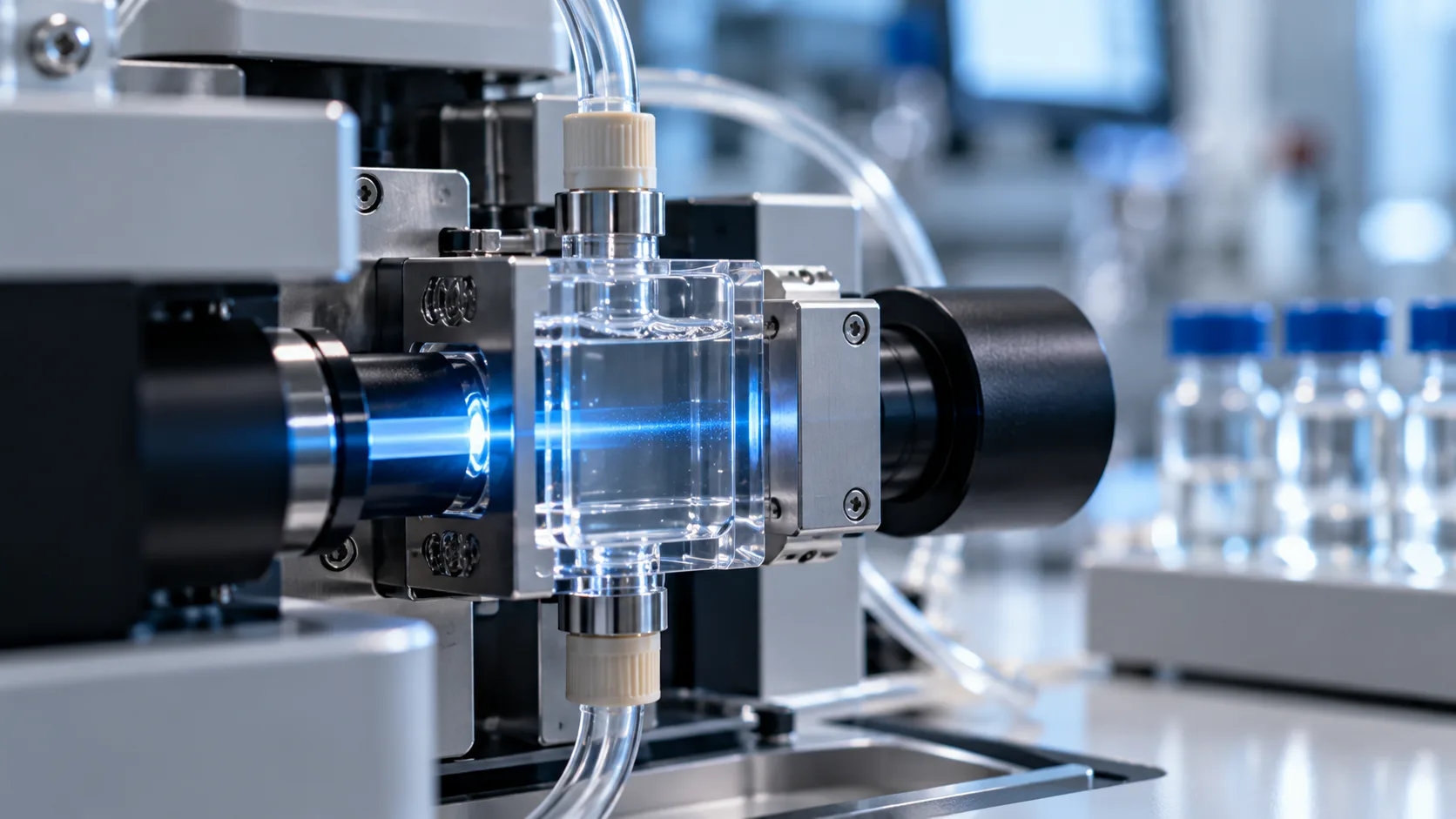
The chapter describes two procedures: light obscuration particle counting and microscopic particle counting. For the preparations covered, light obscuration is the initially described procedure. If the product does not meet the specifications of that test, the text directs the use of the microscopic procedure.
The criteria consider, among other factors, particles measuring 10 µm or larger and 25 µm or larger. However, the limits and reporting units depend on the method and the classification of the preparation.
Analytical limitations also apply. The chapter warns that differences in transparency and viscosity relative to water may compromise light obscuration results. Method selection must therefore consider sample characteristics and the instructions in the applicable monograph.
Particle analysis in the product and airborne particle monitoring answer different questions. They therefore require procedures and instruments appropriate to each sample matrix.
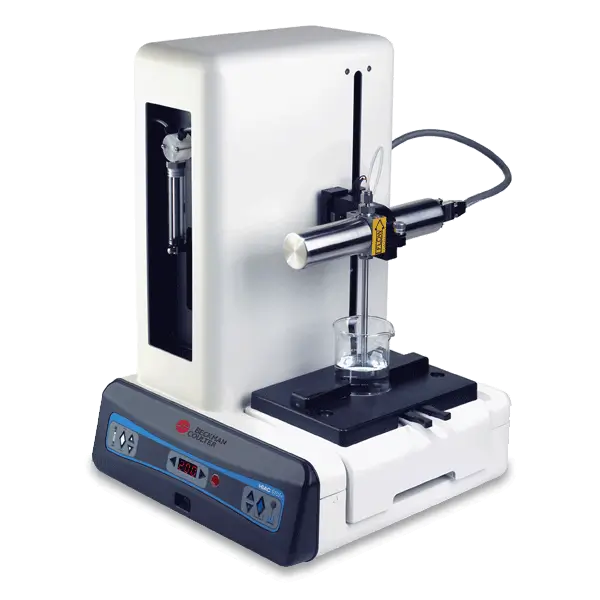
Particles in liquids: HIAC 9703+
The HIAC 9703+ from Beckman Coulter is a liquid particle counter used in pharmaceutical applications, including parenteral solution analysis. The system supports different sensor configurations and sample volumes.
However, the technical ability to analyze smaller volumes does not change the volumes required by the selected pharmacopoeial procedure. Likewise, compatibility with international methods such as USP <788> does not automatically demonstrate compliance with all requirements of Argentina's Chapter 650.
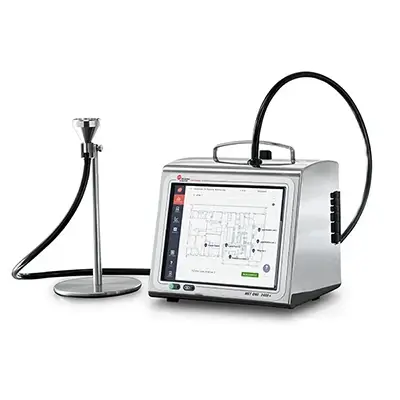
This monitoring does not replace particle counting in the medicinal product. Furthermore, Regulation 5146/2026 does not require the use of the MET ONE 3400+ or any other specific model.
6. What should technical teams verify?
An internal review can begin by identifying the manufacturing technology and requirements applicable to the product. The next step is to verify the analytical methods and corresponding documentation.
The following questions are editorial guidance for technical assessment. They are not an official ANMAT checklist.
Does the process meet the closed-system definition in Regulation 5146/2026?
Does any technology require an adaptation assessment by the health authority?
Which pharmacopoeial texts and specifications apply to each product?
Is the particle counting method suitable for the sample characteristics?
Are sampling, calculation and recordkeeping procedures documented?
7. Conclusion: expanding production requires distinguishing process from product
The projects announced by Argentine manufacturers indicate activity in the parenteral solutions sector. In this context, ANMAT Regulation 5146/2026 makes the criteria for characterizing closed manufacturing systems more explicit.
However, meeting the regulatory definition does not eliminate the quality tests relevant to the product. Subvisible particle assessment, where applicable, must follow the corresponding pharmacopoeial procedure. Environmental monitoring requires its own methods.
The main recommendation is therefore to assess each requirement in context: manufacturing, product quality and environmental conditions. For instrument applications, consult the HIAC 9703+ and MET ONE 3400+ technical pages in INNOTEC's catalog.