

A study published in ACS Applied Materials & Interfaces showed that functionalization of Mg-MOF-74 with tetraethylenepentamine (TEPA) can increase CO₂ adsorption and improve material performance under humid conditions.
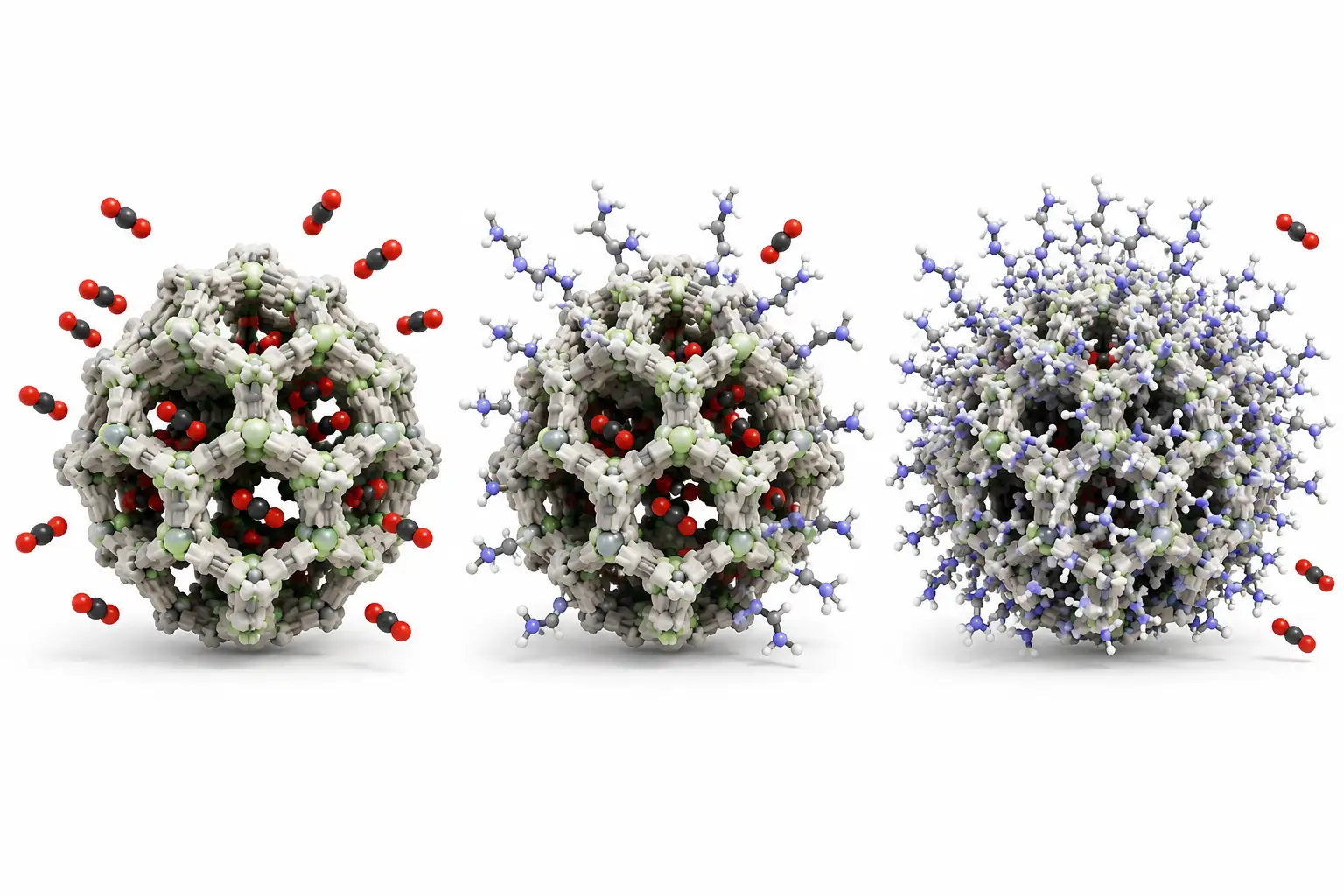
The best result, however, was not achieved with the highest amine loading. Partial functionalization outperformed the material with a TEPA‑saturated surface, indicating that amine amount and distribution are important to preserve CO₂ access to the porous structure.
Why optimize materials for CO₂ capture?
Metal‑organic frameworks, or MOFs , are structures formed by organic components coordinated to metal ions. Their high porosity and surface area make this class of materials a candidate for gas separation and storage, including CO₂ capture.
Among them, Mg‑MOF‑74 exhibits particularly favorable characteristics for carbon dioxide adsorption. The material has a high density of unsaturated magnesium centers and a cylindrical pore structure that favors CO₂ interaction.
Still, high adsorption capacity under dry conditions is not the only relevant factor. Flue gases can contain significant amounts of water vapor, and the presence of water poses a challenge for coordination porous materials like Mg‑MOF‑74.
It was in this context that the researchers studied the functionalization of the material with a polyamine.
Why functionalize Mg‑MOF‑74 with TEPA?
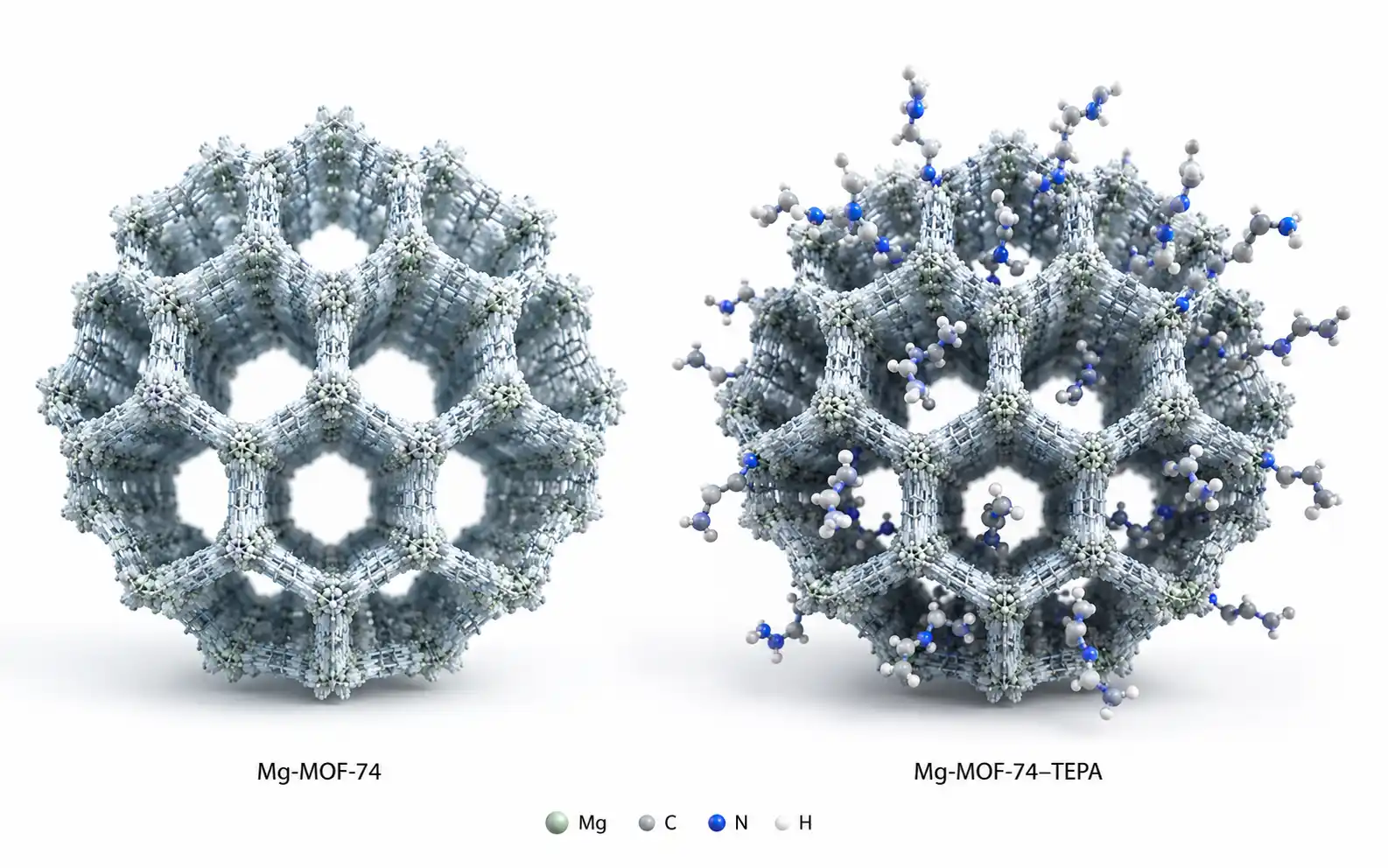
Tetraethylenepentamine, or TEPA, has multiple amine groups. The researchers' proposal was to use these groups to create additional sites capable of interacting with CO₂, in addition to the existing magnesium sites in Mg‑MOF‑74.
There is, however, a possible counter‑effect. Introducing an excessive amount of amine into a microporous material can restrict gas access to the pores.
The authors impregnated Mg‑MOF‑74 with TEPA and investigated both the structure of the functionalized material and its CO₂ adsorption properties under dry and humid conditions.
How was the study carried out?
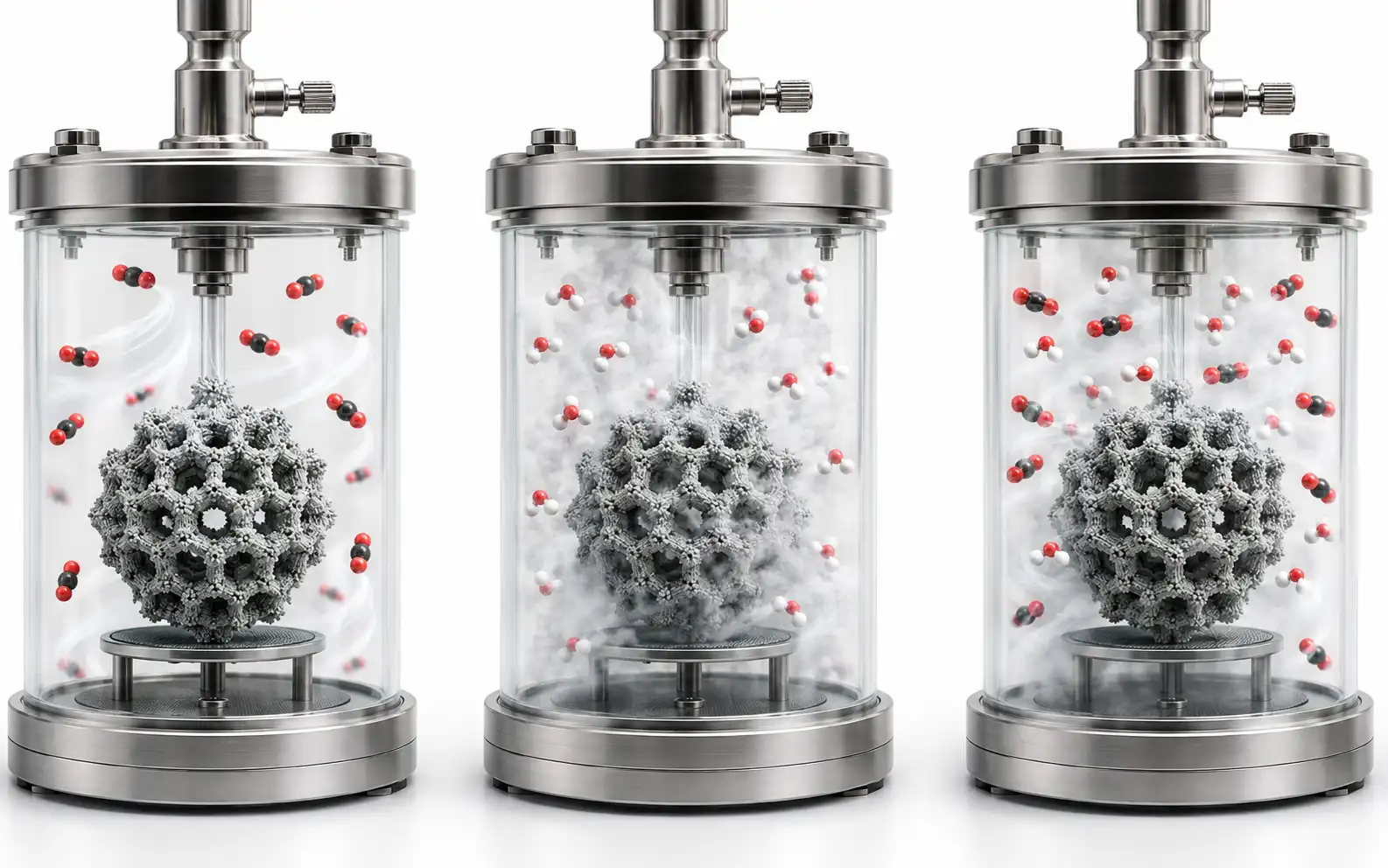
The work compared pristine Mg‑MOF‑74 with materials containing different levels of TEPA functionalization.
| Material | Characteristic |
|---|---|
| Mg-MOF-74 | Pristine material, no TEPA functionalization |
| TEPA-MOF | Lower degree of surface functionalization |
| s-TEPA-MOF | Material with saturated surface sites by TEPA |
To understand how TEPA was distributed throughout the material and whether functionalization altered its structure, the researchers used techniques such as X‑ray diffraction, X‑ray photoelectron spectroscopy (XPS), neutron diffraction, elemental analysis, and microscopy.
The analyses showed that TEPA was present both on the surface and inside the particles, although its concentration was higher in the near‑surface regions. The main crystalline structure of the MOF was preserved after functionalization, with small changes in lattice parameters.
Did TEPA functionalization increase CO₂ adsorption?

Yes, when a lower degree of functionalization was used.
In Dynamic Vapor Sorption (DVS) experiments, the authors reported a CO₂ adsorption capacity of up to 26.9 wt% for TEPA‑MOF , compared to 23.4 wt% for pristine Mg‑MOF‑74 .
It is important to note the basis used to calculate this increase. Considering the total mass of the adsorbent (TEPA + MOF), the authors report an increase of approximately 11%. When the mass of pristine Mg‑MOF‑74 is used as the basis, the increase approaches 15%.
The result should not be summarized simply as “15% more capture”. The percentage depends on the mass basis adopted: approximately 11% on the total adsorbent mass or close to 15% when the pristine MOF is used as reference.
The TEPA-MOF species also showed a marked 11% wt increase in uptake capacity relative to that of the native MOF.
The authors attribute this increase to two complementary factors: the presence of additional sites provided by the amines and the maintenance of access to the unsaturated magnesium sites inside the MOF.
Comparison of CO₂ adsorption
Figure 4 of the study presents the adsorption isotherms and desorption of CO₂ for Mg‑MOF‑74 and TEPA‑MOF at 25 °C, at pressures up to 760 Torr.
The curves show higher CO₂ uptake for the functionalized material throughout the pressure range evaluated.
Another relevant result is the absence of noticeable pressure hysteresis in the curves presented. According to the authors, all CO₂ adsorbed at 1 atm partial pressure was released when the desorption temperature reached 120 °C.
“all of the CO2 adsorbed at 1 atm partial pressure was released.”
Does more TEPA mean higher CO₂ adsorption?
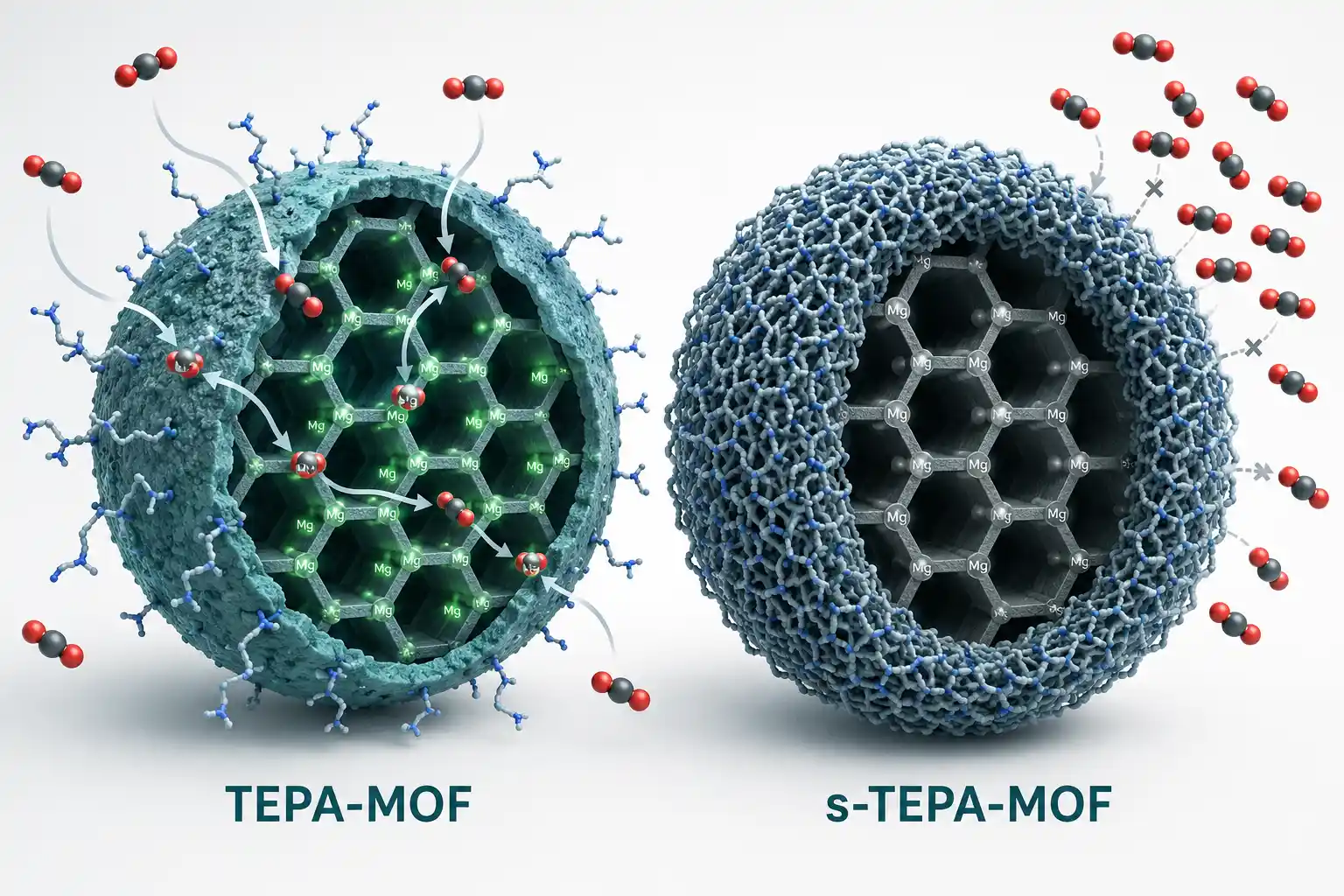
Not in the materials evaluated in the study.
Although s‑TEPA‑MOF had a higher surface amine concentration, its CO₂ adsorption capacity was significantly lower than that of TEPA‑MOF with a lower degree of functionalization.
The authors attribute this behavior to the steric hindrance caused by a dense TEPA layer on the surface. This layer would hinder gas transport and reduce CO₂ access to the magnesium sites located inside the material.
| Material | Site availability | Observed effect |
|---|---|---|
| Mg-MOF-74 | Mg sites from the MOF itself | High CO₂ adsorption capacity |
| TEPA-MOF | Amines + accessible internal Mg sites | Highest CO₂ adsorption among the compared conditions |
| s-TEPA-MOF | High TEPA surface coverage, reduced internal access | Lower CO₂ adsorption |
Activation temperature also influences CO₂ adsorption
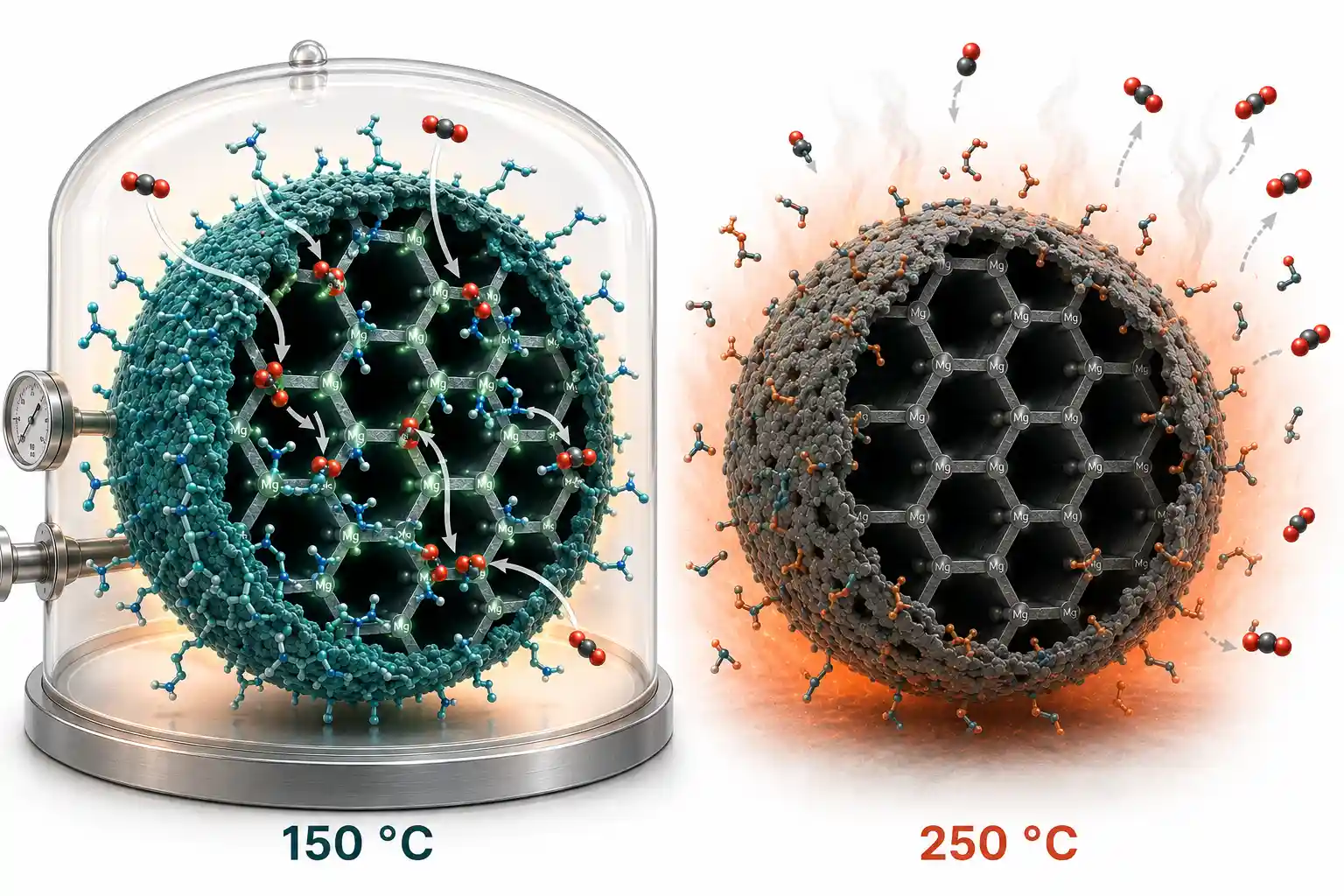
The degree of functionalization was not the only relevant factor. The conditions used to activate the adsorbent before the experiments also affected its performance.
For the functionalized systems evaluated in the study, the authors identified 150 °C under vacuum as the most favorable activation condition for CO₂ adsorption .
Higher temperatures favored TEPA degradation. In the thermogravimetric analysis experiments described by the authors, approximately half of the TEPA incorporated into the material was decomposed and lost after exposure to 250 °C during the thermal run.
Exposure of the functionalized material to 250 °C was also associated with a significant reduction in its capacity to sorb CO₂, water vapor, or their mixtures.
How does humidity affect CO₂ capture?
The presence of water is particularly relevant when adsorbent materials are evaluated for applications related to flue gases.
To investigate this behavior, the authors carried out DVS experiments using a CO₂/H₂O ratio of 2:1 , described in the work as similar to that found in certain flue gas streams from coal‑fired power plants.
Pure water vapor, on the other hand, showed similar uptake values for Mg‑MOF‑74 and TEPA‑MOF near saturation, reaching approximately 59 wt% H₂O.
The main difference appeared when CO₂ and water were present simultaneously.
Mg‑MOF‑74 showed significant hysteresis during the CO₂/H₂O adsorption‑desorption cycle. For TEPA‑MOF, the authors report fully reversible behavior over the entire pressure range evaluated.
The study does not demonstrate that TEPA simply prevents water adsorption. Pure water vapor adsorption was similar in both materials. The advantage appeared mainly in the behavior of TEPA‑MOF during co‑adsorption of CO₂ and H₂O.
With the TEPA-functionalized MOF, however, the uptake was fully reversible over the full pressure range.
Based on these results, the authors describe TEPA‑MOF as a more robust material for carbon capture under humid conditions.
Material behavior in the presence of CO₂ and water
Figure 6 presents two important data sets:
- adsorption and desorption in a 2:1 CO₂/H₂O mixture;
- adsorption and desorption of pure water vapor.
The comparison helps to show that the difference between the materials is not simply in the amount of water adsorbed, but in the behavior of the structure when water and CO₂ are present simultaneously.
What explains TEPA‑MOF performance?
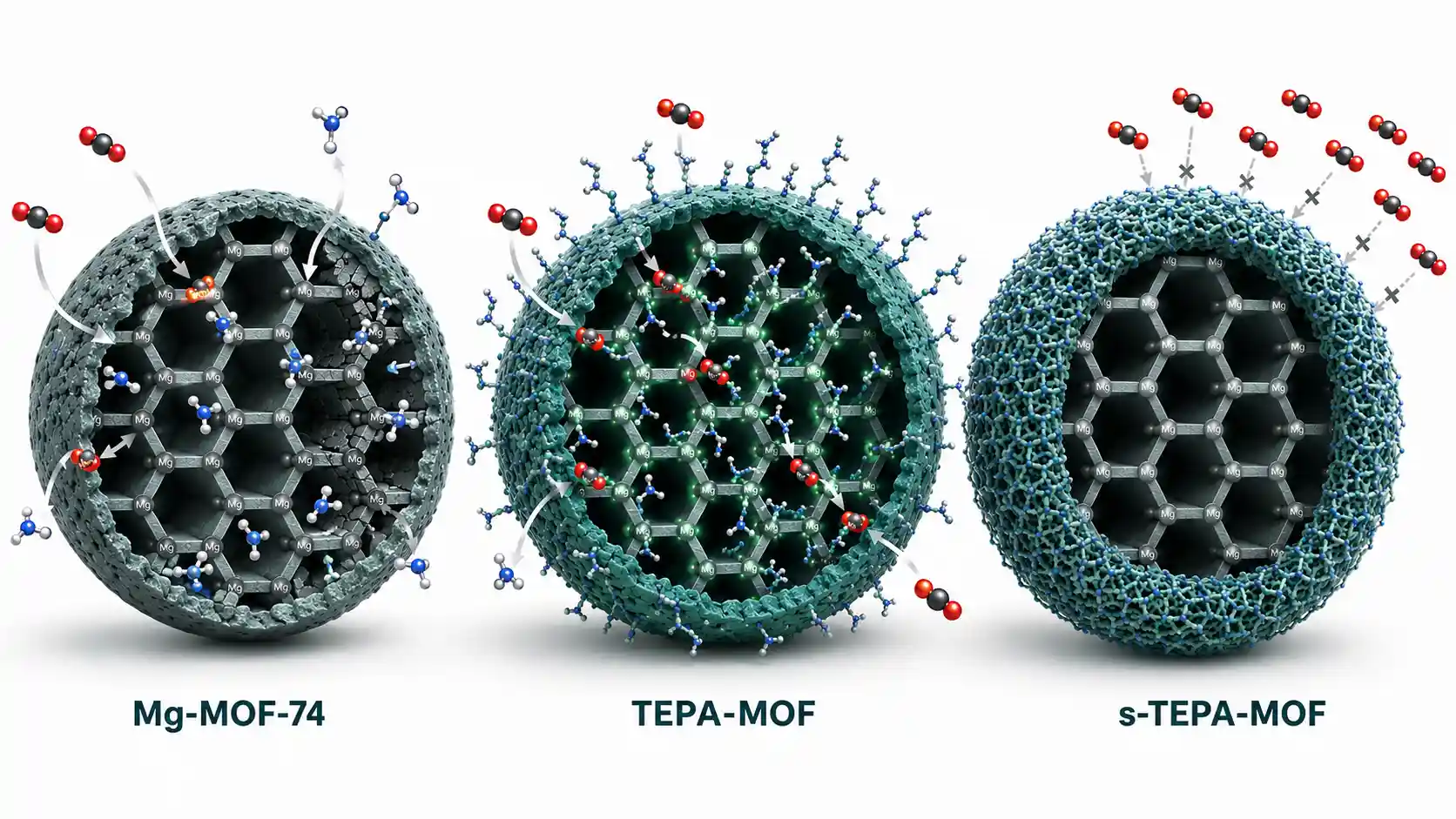
Structural characterization and sorption experiments led the authors to propose a mechanism based on TEPA distribution and pore accessibility.
Analyses indicated that TEPA molecules did not stay exclusively on the surface. They were incorporated throughout the particles, although they showed higher concentration in the surface regions.
With partial coverage, the amine groups provide additional CO₂ interaction sites while the unsaturated Mg sites inside the MOF remain accessible.
When the surface is excessively functionalized, the TEPA layer can limit this access.
A visual summary of the mechanism
Figure 7 of the study brings together the main results in a comparative scheme.
| System | Interpretation presented by the study |
|---|---|
| Mg-MOF-74 | CO₂ and H₂O can access the structure; the presence of water may compromise its stability. |
| TEPA-MOF | Partial functionalization maintains CO₂ access and offers greater protection of the structure under humid conditions. |
| s-TEPA-MOF | High surface coverage restricts CO₂ access to internal sites. |
How was Dynamic Vapor Sorption used in the study?
A central part of the sorption experiments was carried out with a DVS Vacuum system from Surface Measurement Systems .
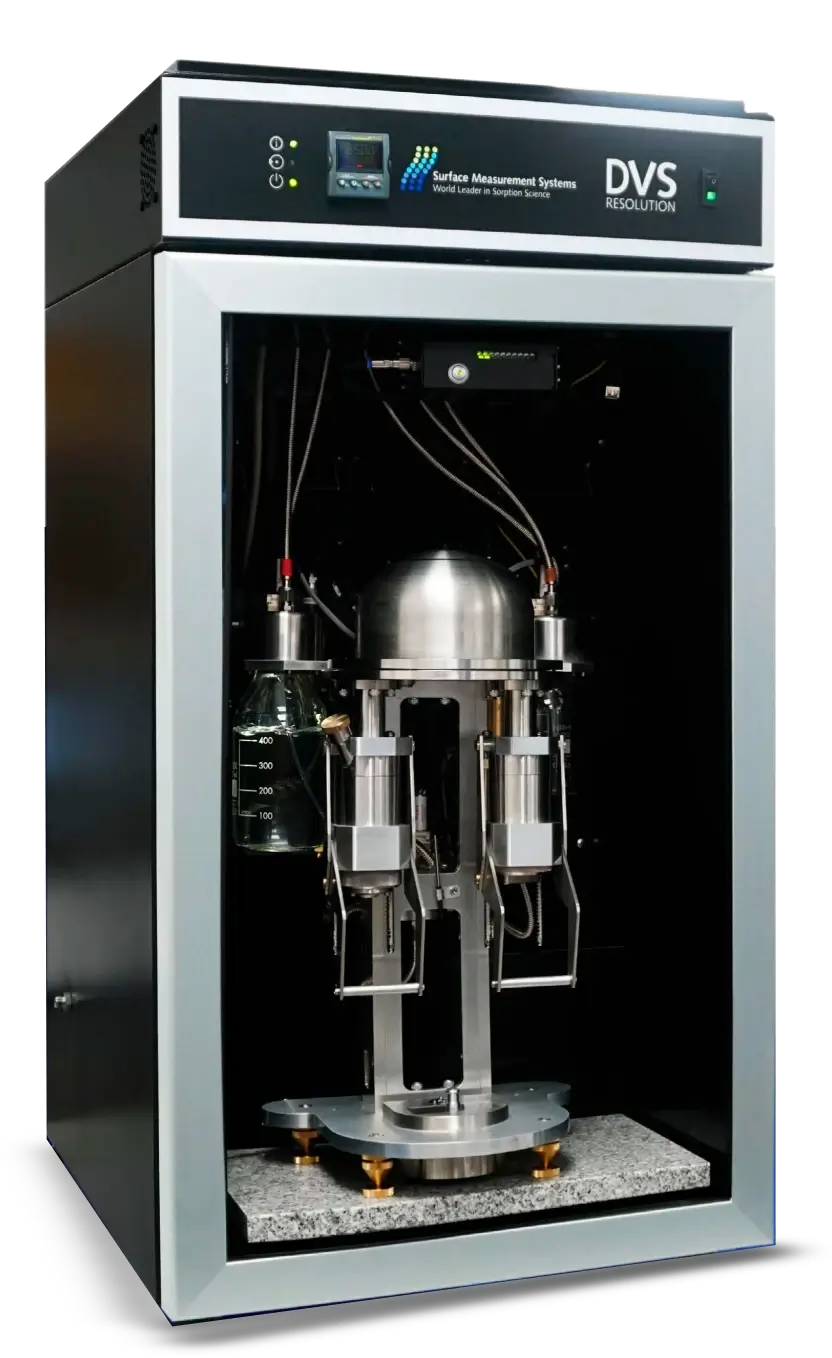
The equipment gravimetrically measures the mass change of the sample during sorption and desorption processes. According to the method described by the authors, the system used had a microbalance with a sensitivity of 0.1 µg.
CO₂ experiments were carried out between 0 and 760 Torr, while cycles involving H₂O and CO₂/H₂O were performed at 25 °C with control of the water vapor relative pressure.
In the study, the DVS Vacuum was used to monitor:
- CO₂ adsorption and desorption;
- water vapor sorption;
- CO₂ and H₂O co‑adsorption;
- equilibrium behavior at different pressure steps.
Samples could also be degassed in situ before the experiments, under high vacuum and controlled temperature.
What does the study reveal about carbon capture optimization?
For the investigated Mg‑MOF‑74/TEPA system, the results show that CO₂ adsorption capacity depends on several factors acting simultaneously.
- Functionalization: TEPA can provide additional sites for CO₂ interaction.
- Accessibility: excess TEPA can restrict gas transport to internal sites.
- Activation: inadequate temperatures can degrade the amine and reduce material capacity.
- Humidity: adsorbent behavior changes when CO₂ and water are present simultaneously.
The authors conclude that partial functionalization of Mg‑MOF‑74 provided the best balance between amine group contribution and maintenance of accessibility to metal sites.
Under these conditions, TEPA‑MOF achieved 26.9 wt% CO₂ adsorption by DVS, compared to 23.4% for Mg‑MOF‑74, and also exhibited more favorable behavior during experiments carried out in the simultaneous presence of CO₂ and water.
Perform these sorption tests on your material with Innotec
If you develop adsorbents, MOFs, polymers, or moisture‑sensitive powders, the same experiments described here — CO₂ isotherms under vacuum, CO₂ and water vapor co‑adsorption, desorption cycles, and in‑situ activation at controlled temperature — can be run in your laboratory.
Innotec represents Surface Measurement Systems gravimetric sorption analyzers in Latin America and helps define the appropriate configuration for your sample type.
Click here to speak with a specialist and request a quote.
Frequently Asked Questions about CO₂ capture with Mg‑MOF‑74 and TEPA functionalization
What is Mg‑MOF‑74 and why is it used for CO₂ capture?
Mg‑MOF‑74 is a metal‑organic framework formed by organic ligands coordinated to magnesium ions. It is studied for CO₂ capture because it combines high porosity with a high density of unsaturated magnesium centers, which interact strongly with carbon dioxide, along with a cylindrical pore structure that favors this interaction.
What is TEPA functionalization of a MOF?
TEPA functionalization consists of impregnating the porous material with tetraethylenepentamine, a polyamine that has multiple amine groups. The goal is to create additional sites capable of interacting with CO₂, adding to the metal sites already present in the MOF structure.
How much did TEPA functionalization increase CO₂ adsorption in the study?
In Dynamic Vapor Sorption experiments, TEPA‑MOF reached up to 26.9 wt% CO₂ adsorption, compared to 23.4% for pristine Mg‑MOF‑74. The reported increase is approximately 11% when considering the total adsorbent mass (TEPA + MOF), and approaches 15% when using the pristine MOF mass as the calculation basis.
Why doesn't more TEPA mean higher CO₂ adsorption?
Because excess amine forms a dense layer on the material surface. According to the authors, this steric hindrance hinders gas transport and reduces CO₂ access to the magnesium sites located inside the particle. That is why s‑TEPA‑MOF, with the saturated surface, had a lower adsorption capacity than the partially functionalized material.
What is the best activation temperature for amine‑functionalized MOFs?
For the functionalized systems evaluated in the study, the authors identified 150 °C under vacuum as the most favorable condition. Higher temperatures favored amine degradation: about half of the incorporated TEPA was decomposed and lost after exposure to 250 °C during the thermogravimetric run. This value does not represent a universal activation temperature for MOFs, but rather a condition suitable for the investigated TEPA systems.
How does humidity affect CO₂ capture in MOFs?
The presence of water vapor is relevant because flue gases contain significant amounts of moisture, and coordination porous materials can have their stability compromised under these conditions. In the study, pure water vapor adsorption was similar in both materials, reaching about 59 wt% near saturation. The difference appeared in co‑adsorption: Mg‑MOF‑74 showed significant hysteresis in the CO₂ and water cycle, while TEPA‑MOF showed reversible behavior over the entire pressure range evaluated.
Does TEPA prevent water from entering the MOF?
That is not what the study demonstrates. Pure water vapor uptake was similar in both materials. The advantage of TEPA‑MOF appeared mainly in the behavior of the structure when CO₂ and water were present simultaneously, with reversible sorption instead of the hysteresis observed for the original material.
What is Dynamic Vapor Sorption and how was the technique applied in the study?
Dynamic Vapor Sorption, or DVS, is a gravimetric technique that measures the mass change of a sample during sorption and desorption processes, under controlled pressure and temperature. In the work, a DVS Vacuum system with a microbalance sensitivity of 0.1 µg was used to monitor CO₂ adsorption and desorption between 0 and 760 Torr, water vapor sorption, CO₂ and H₂O co‑adsorption, and equilibrium behavior at different pressure steps.
Why does amine distribution matter more than quantity?
The analyses indicated that TEPA was incorporated throughout the particles, with higher concentration in the near‑surface regions. With partial coverage, the amine groups provide extra interaction sites while the magnesium sites inside remain accessible to the gas. When the surface is excessively functionalized, this same layer restricts access, and the gain disappears.