

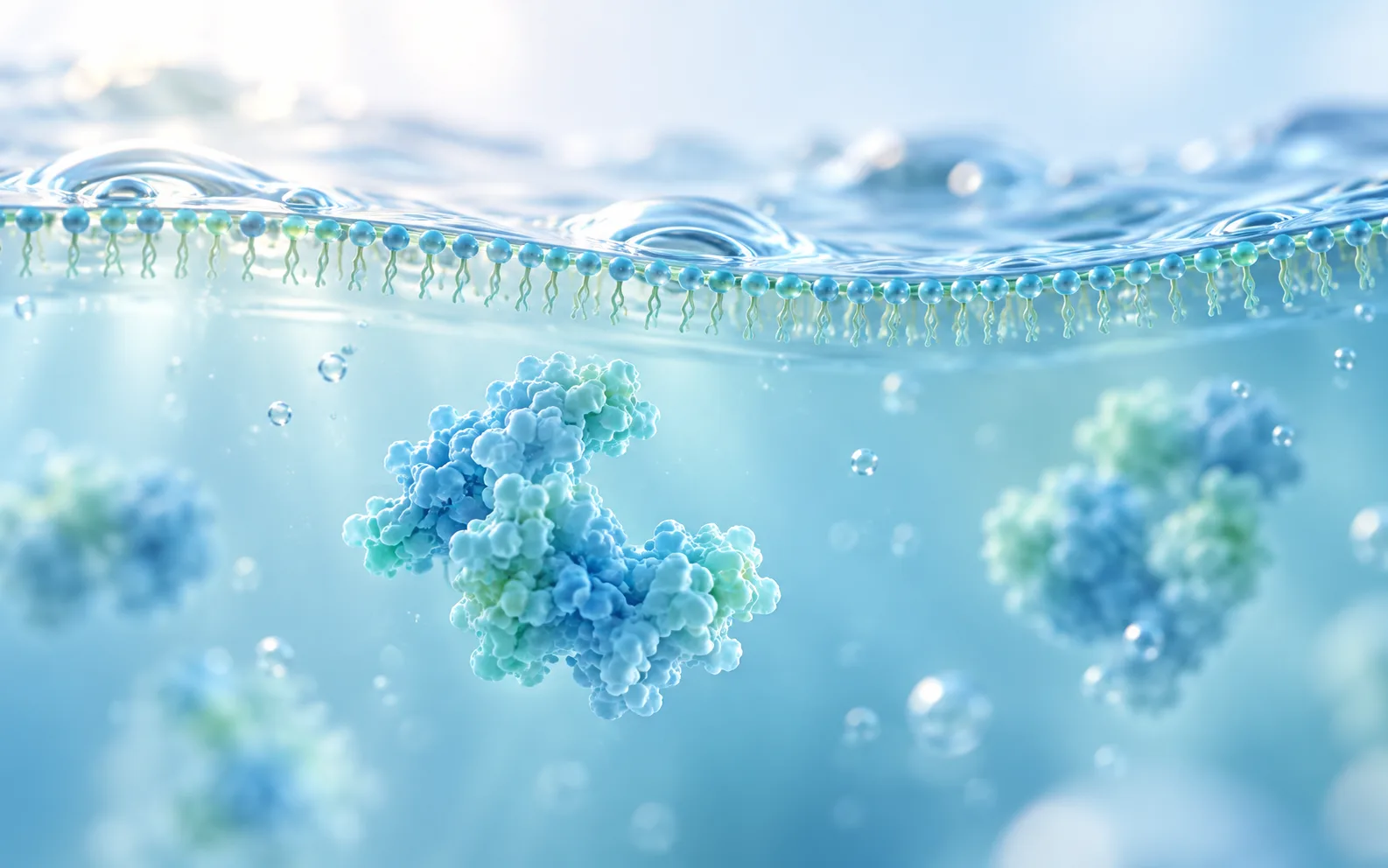
A study published in the journal Molecular Pharmaceutics , titled “ Dynamic Properties of Novel Excipient Suggest Mechanism for Improved Performance in Liquid Stabilization of Protein Biologics ”, compared FM1000 with Polysorbate 20, Polysorbate 80 and Poloxamer 188.
This faster interfacial dynamics was associated with lower aggregation of IgG and abatacept during agitation, indicating that the rate at which the surfactant reaches and stabilizes the interface is an important factor in protecting therapeutic proteins.
Polysorbates are widely used to protect proteins, but agitation can still generate aggregation
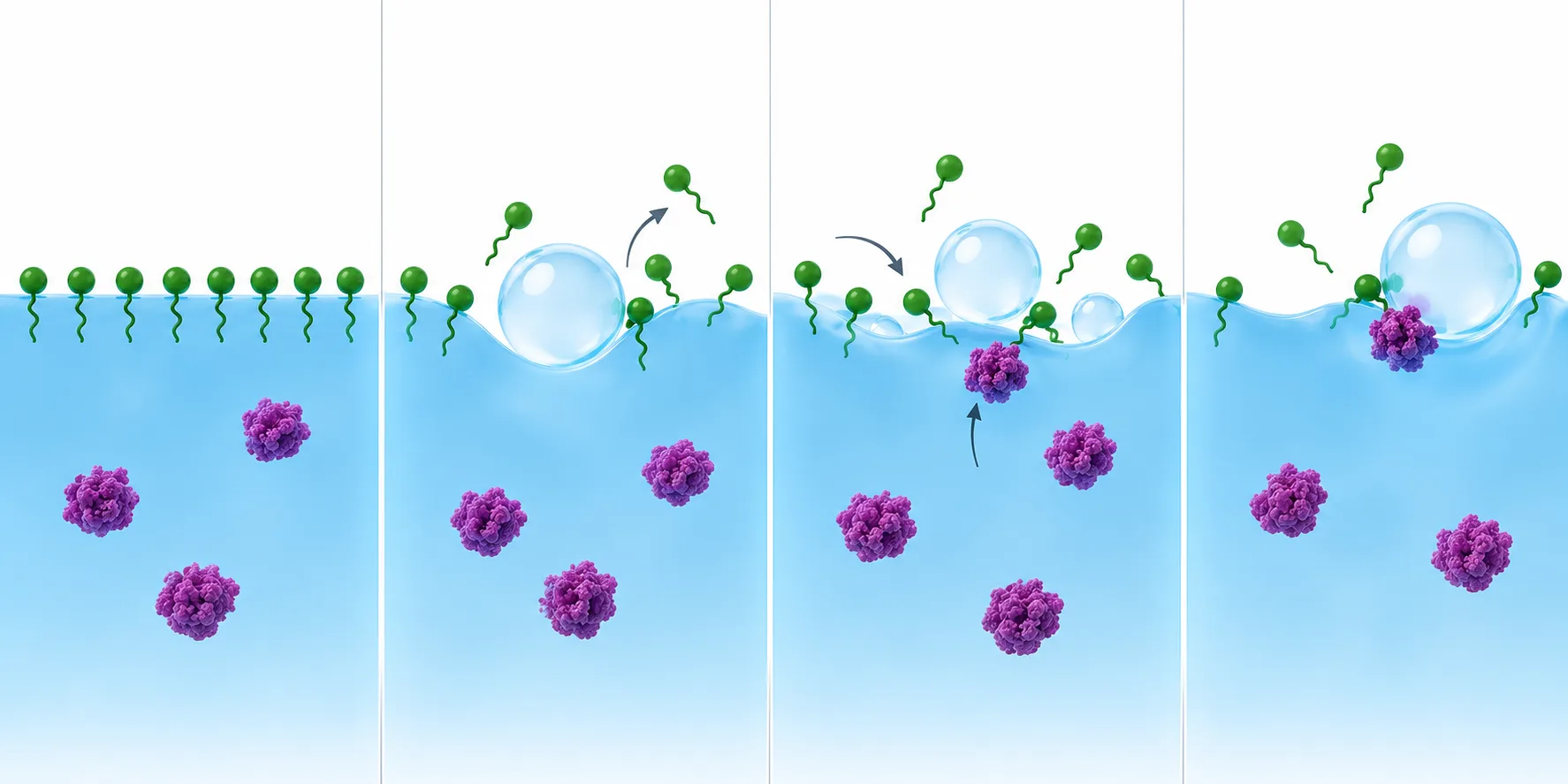
In biopharmaceutical formulations, Polysorbate 20 (PS20) and Polysorbate 80 (PS80) are used to reduce protein adsorption at interfaces and limit the formation of aggregates and particles. This application was already well established before the FM1000 study.
In 2015, the study “Surfactant Effects on Particle Generation in Antibody Formulations in Pre-filled Syringes” evaluated monoclonal antibody formulations containing PS20 subjected to agitation in pre-filled syringes and demonstrated its use in reducing adsorption at interfaces such as silicone–water and air–water and mitigating particle formation.
The hypothesis was that this difference could lie in interfacial dynamics: not only in the ability to reduce surface tension , but in how quickly the surfactant reaches and stabilizes a new interface before the protein adsorbs to it.
What is FM1000 and why was it compared with conventional surfactants?
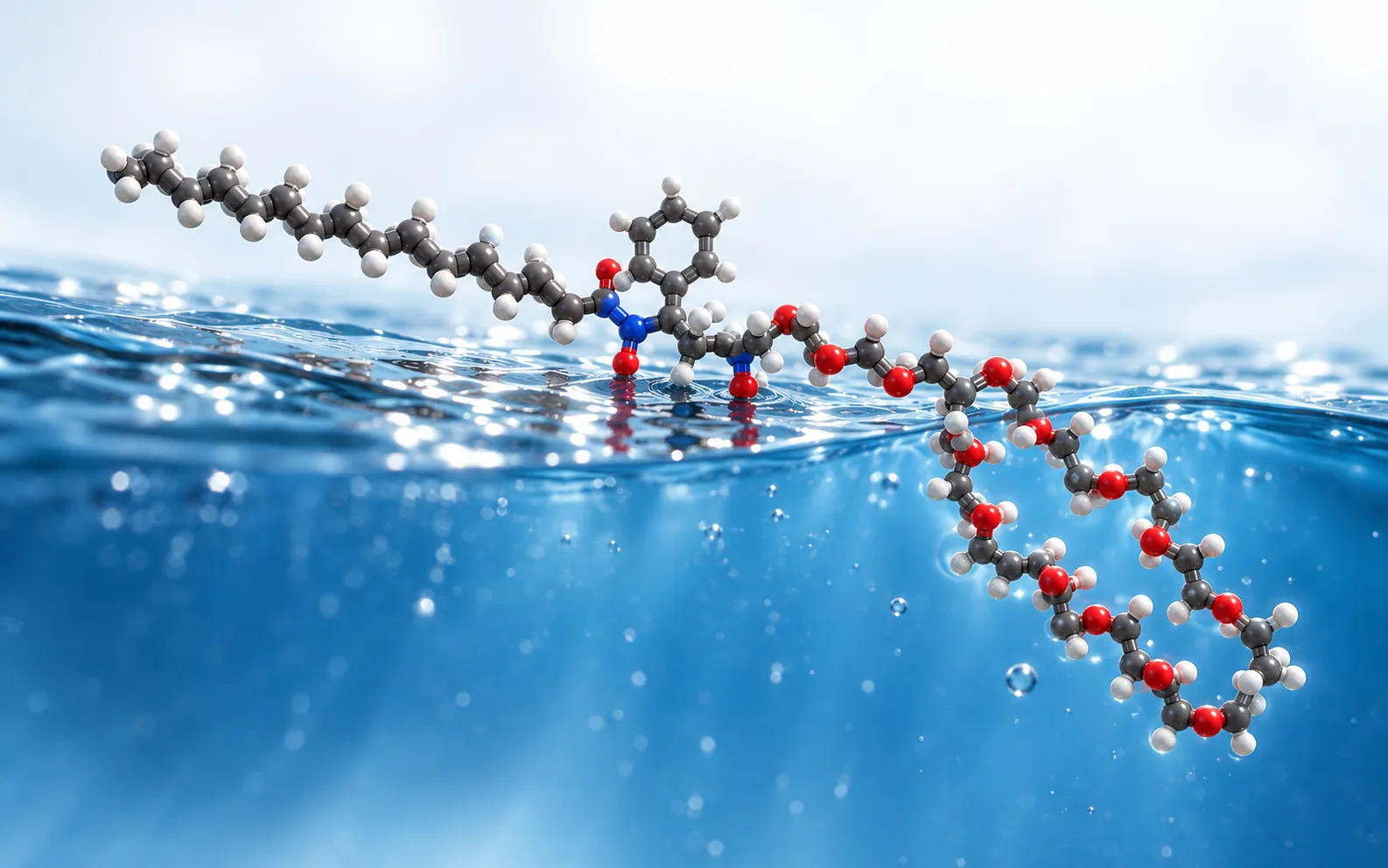
To view the molecular structure of FM1000 presented in the study, click here .
In the study, it was evaluated as an alternative to surfactants already used in protein formulations, primarily Polysorbate 20, Polysorbate 80, and Poloxamer 188.
The comparison was performed because these conventional surfactants are already used to reduce undesirable interactions between proteins and interfaces, but stability may still be insufficient under agitation. The objective, therefore, was to determine whether FM1000 exhibited different interfacial dynamics and whether this difference could explain more effective protection against aggregation.
Comparison of the interfacial dynamics of FM1000, Polysorbate 20, Polysorbate 80, and Poloxamer 188
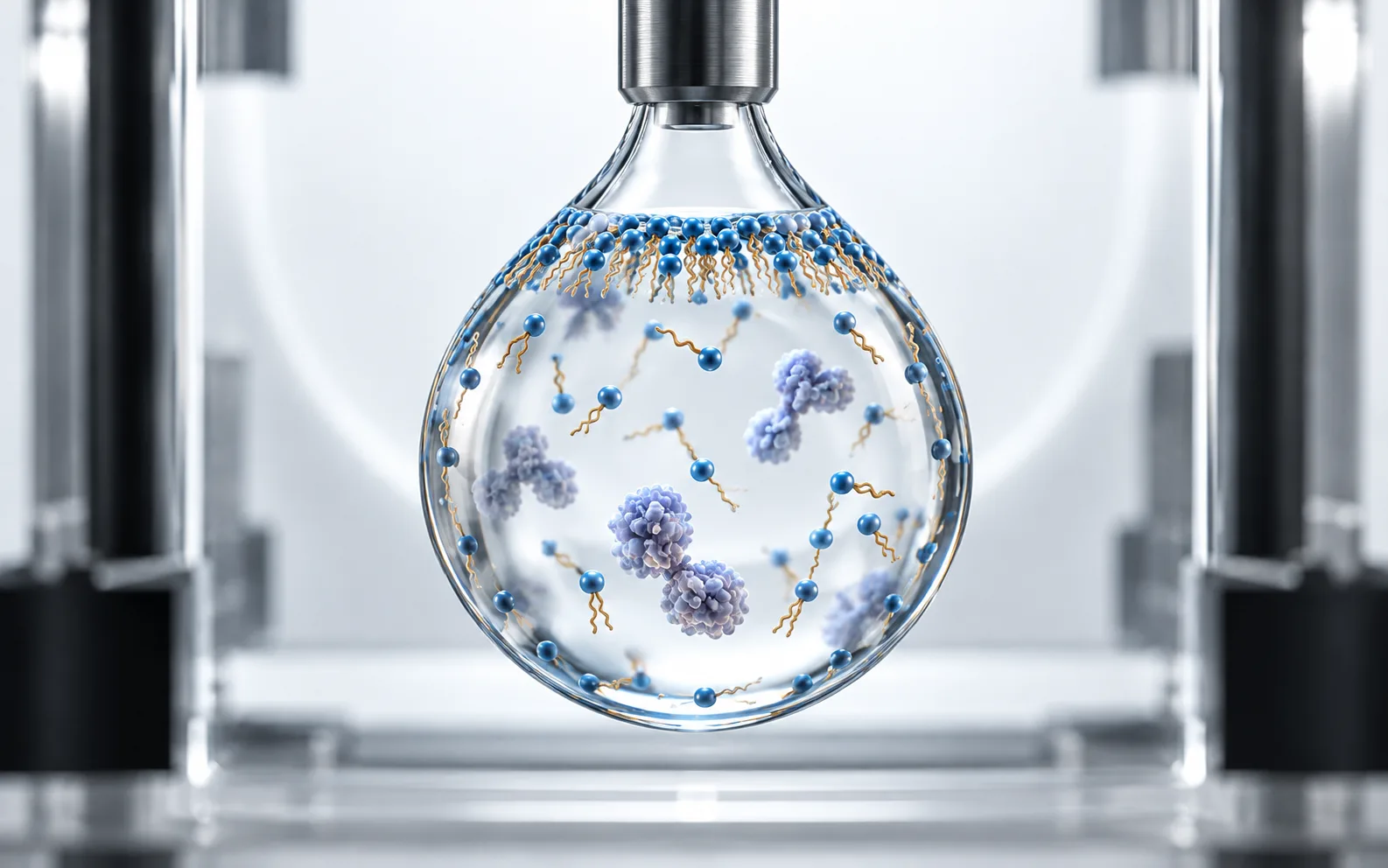
The researchers compared FM1000 with three surfactants already used in protein formulations: Polysorbate 20, Polysorbate 80, and Poloxamer 188.
Rather than evaluating only equilibrium surface tension, the study tracked the rate at which each surfactant reached and stabilized different interfaces between water and hydrophobic surfaces, including in the presence of proteins.
Using these data, the authors also evaluated surfactant transport to the interface with the Lucassen–van den Tempel diffusion–exchange model, allowing them to compare not only the final state of the interface but also how rapidly it formed and stabilized.
Finally, this difference in interfacial behavior was related to the protection of two model proteins, IgG and abatacept, subjected to agitation. Combining measurements of interfacial dynamics with evaluation of protein aggregation allowed the authors to determine whether faster stabilization actually translated into greater protein protection.
FM1000 stabilized interfaces up to 100 times faster than conventional surfactants
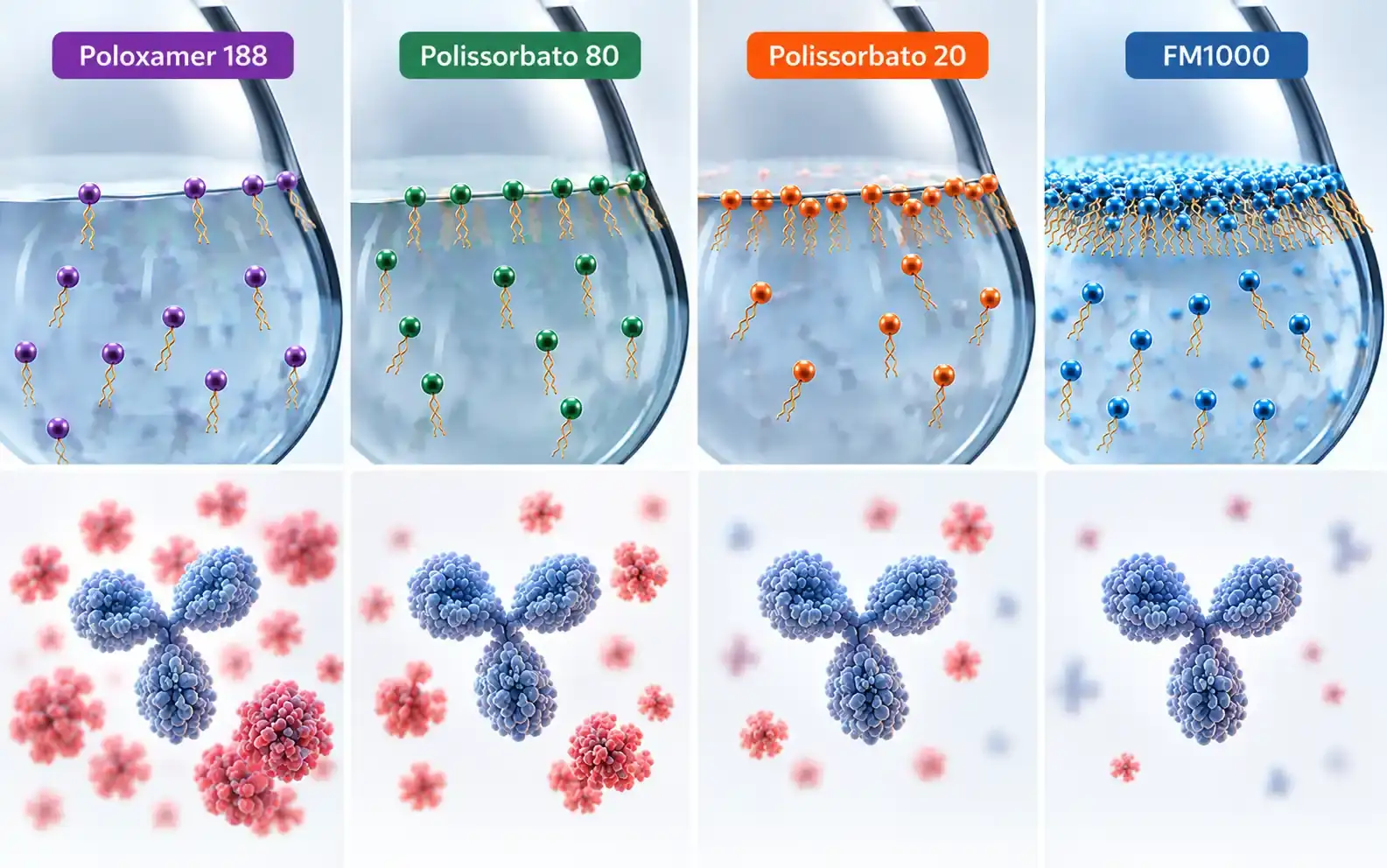
FM1000 exhibited interfacial stabilization 1 to 2 orders of magnitude faster than Polysorbate 20, Polysorbate 80, and Poloxamer 188. In practical terms, this corresponds to dynamics approximately 10 to 100 times faster, depending on the experimental condition.
This difference in dynamics had a direct effect on protein stability. In tests with IgG and abatacept subjected to agitation, FM1000 was associated with lower aggregate formation than the conventional surfactants evaluated. The results support the conclusion that protection depends not only on the ability to reduce surface tension, but also on how quickly the surfactant occupies and stabilizes the interface before the protein adsorbs to it.
Measuring only equilibrium surface tension can conceal differences between surfactants
An equilibrium measurement shows the final state reached by the system, but not necessarily how long the surfactant took to reach that state. This point was central to the study: FM1000 stabilized interfaces 1 to 2 orders of magnitude faster than PS20, PS80, and P188, a difference related to adsorption kinetics and reorganization at the interface.
For this reason, the measurements of
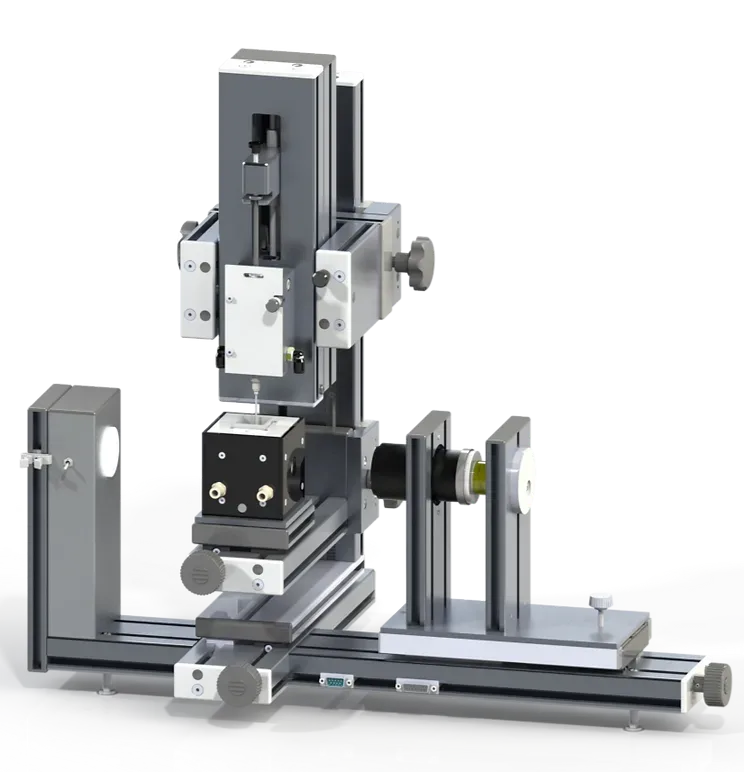
dynamic surface tension and interfacial rheology performed with the TRACKER , by TECLIS
, played an important role in the investigation. They made it possible to track interfacial behavior over time and, using the Lucassen–van den Tempel model, analyze surfactant transport to the interface.
Interfacial dynamics may be an important criterion when selecting surfactants for proteins
The results indicate that selecting a surfactant for protein formulations may require more than comparing its ability to reduce surface tension. In the study, FM1000, PS20, PS80, and P188 differed primarily in how quickly they reached and stabilized the interface, and this difference was associated with protection against agitation-induced aggregation.
The result does not mean that a single parameter determines formulation stability, but it shows that the rate of interfacial stabilization can help explain performance differences among surfactants.
Results with IgG and abatacept cannot be generalized to all protein formulations
Although FM1000 showed faster interfacial dynamics and better protection against aggregation in the experiments performed, the study evaluated specific conditions and two model proteins, IgG and abatacept. Therefore, the results do not demonstrate that FM1000 is necessarily superior to PS20, PS80, or P188 for every protein, concentration, or biopharmaceutical formulation.
Surfactant selection still depends on protein characteristics, formulation composition, and processing and storage conditions.
Surface tension dynamics and interfacial rheology help explain protein stabilization
The findings of this study show why measuring interfacial behavior over time can be as important as knowing its equilibrium state. It was through dynamic surface tension measurements performed with the TRACKER , by TECLIS , complemented by interfacial rheology, that the researchers were able to reveal that FM1000 stabilized the interface 10 to 100 times faster than PS20, PS80, and P188 and relate this difference to lower aggregation of IgG and abatacept.
In this context, the TRACKER is not merely a measurement instrument, but a characterization tool capable of revealing mechanisms relevant to understanding and developing stabilization strategies for therapeutic proteins.
TRACKER and interfacial characterization solutions in Latin America
INNOTEC LATAM operates across Latin America with scientific instrumentation, metrology, and specialized technical support. The company emerged from the combination of Dafratec and Inprocsa and maintains regional activities in areas such as particle characterization, environmental monitoring, water purification, and analytical instrumentation.
Within this portfolio, INNOTEC offers the TRACKER , classified as an automatic drop tensiometer and dilational interfacial rheometer , for surface/interfacial tension and interfacial rheology studies. This type of characterization was precisely what made it possible, in the study discussed above, to differentiate surfactant dynamics and relate them to protein stabilization.
Frequently asked questions about surfactants and protein aggregation
Why can agitation cause protein aggregation?
Agitation promotes the formation and renewal of interfaces, especially the air–liquid interface. Proteins can adsorb in these regions, undergo structural changes, and increase the likelihood of aggregation, particularly when the surfactant does not occupy the interface quickly enough.
What is the role of surfactants in therapeutic protein formulations?
Surfactants such as Polysorbate 20 and Polysorbate 80 are used to reduce protein adsorption at interfaces and help limit aggregate and particle formation during formulation processing, storage, and handling.
Why can equilibrium surface tension be insufficient for evaluating a surfactant?
Equilibrium surface tension shows the final state of the system but does not indicate how long the surfactant took to reach that state. The study showed that the rate of interfacial stabilization can be decisive in differentiating surfactant performance under agitation.
What is interfacial dynamics?
Interfacial dynamics describes how an interface behaves over time, including the rate of adsorption, reorganization, and stabilization of components in the system. In protein formulations, this behavior can influence how long the protein remains exposed to potentially destabilizing interfaces.
How is TRACKER used to study protein stabilization?
TRACKER enables measurement of the time evolution of surface tension and evaluation of interfacial rheological properties. In the study, these measurements helped reveal differences in stabilization rate among FM1000, PS20, PS80, and P188 and relate them to the aggregation behavior of IgG and abatacept.
How can I request a TRACKER quote or obtain more information?
To request a quote, technical information, or discuss applications of TRACKER , contact the INNOTEC LATAM team by phone at +54 11 7079-4042 or by email at info@innoteclatam.com .