

Surface energy and powder flow: why the study with D-mannitol and iGC SEA deserves attention
Powder flow behavior is still, in many laboratories and pharmaceutical plants, treated almost as a "black box." Particle sizes, moisture levels, and compression conditions are adjusted, but the surface chemistry of the particles remains a point often neglected — even though it is one of the most critical factors for cohesion, agglomerate formation, and process stability.
The study with D-mannitol using the iGC SEA ( Inverse Gas Chromatography – Surface Energy Analyzer ) , together with the FT4 Powder Rheometer , clearly shows how surface energy distributions are directly connected to powder flowability . And, more importantly, it reveals how surface chemical modifications can be quantified and related to real process performance.
the iGC SEA transforms the "feel of flow" into surface energy data that explains, justifies, and helps predict powder behavior.
From the study objective to the reality of those working with powders
The study's objective is direct and highly applicable:
Relating the surface energy (and its heterogeneity) of D-mannitol to the powder flow properties, before and after a surface chemical modification.
In practical terms, the authors measure "how is" the surface of D-mannitol in terms of dispersive and acid-base energy, perform a methylation/silanization on the exposed hydroxyl groups, and compare:
-
how this change appears in the surface energy profiles measured by iGC SEA
-
and how it translates into flow parameters obtained on the FT4.
D-mannitol is an excellent model for the industry: it is a widely used crystalline excipient in oral tablets, chewables, and granules, sensitive to morphology and moisture. In other words, it is not an artificial system — it is a material that actually appears in pharmaceutical development routines.
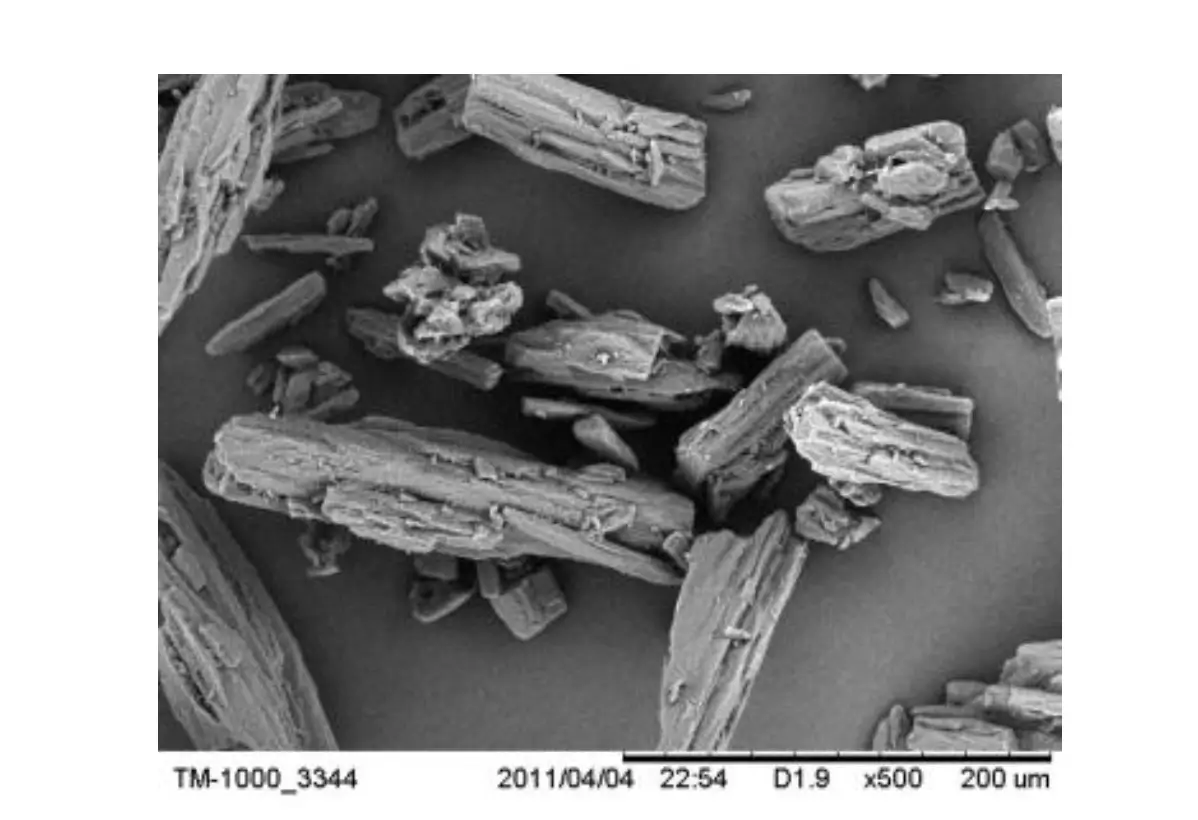
Figure 1 SEM image of D-mannitol as received
When surface treatment changes the game: from heterogeneous hydrophilic to homogeneous hydrophobic
In the study, the "AR" D-mannitol (untreated) is subjected to a reaction with dichloro-dimethyl-silane , which promotes the methylation of exposed –OH groups on the surface. These naturally polar and hydrophilic hydroxyl groups are replaced by –Si(CH₃)₂ , making the surface more hydrophobic and less polar.
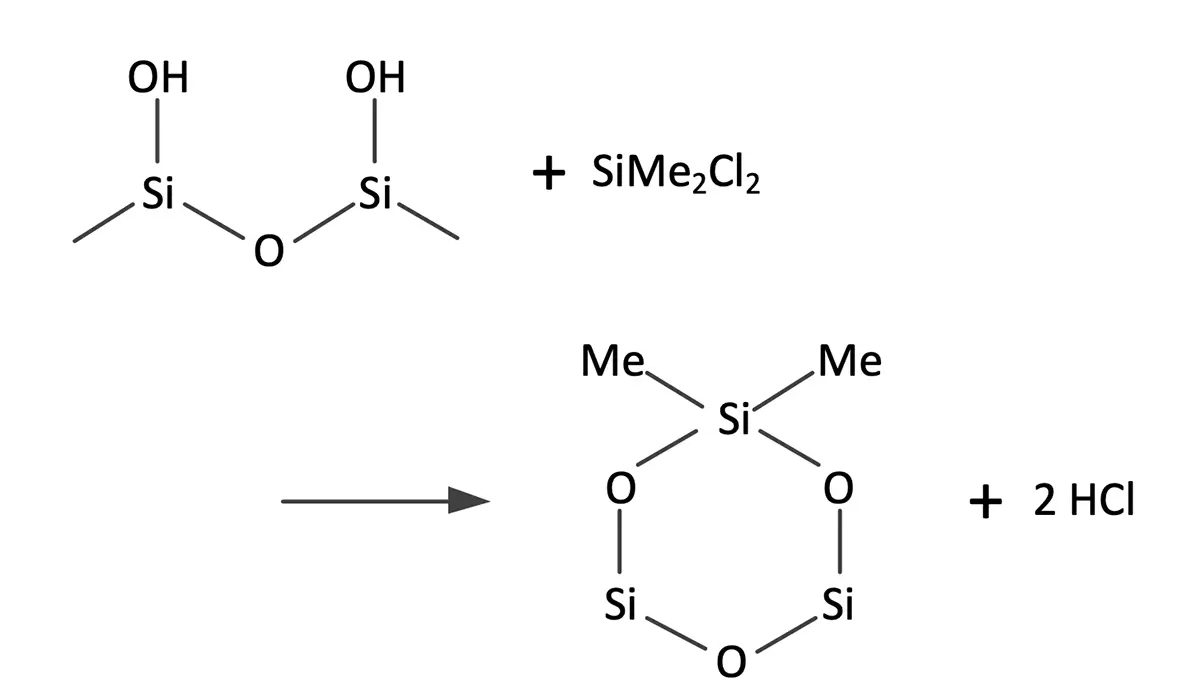
Figure 2 Scheme of the hydroxyl group methylation reaction
After the reaction, the material is washed, dried, and sieved to the same particle size range as the original powder. This is crucial: particle size and size distribution remain comparable , which isolates the effect of surface chemistry on the differences in flow.
Key highlight: the study shows that it is possible to improve flowability without drastically changing particle size — only by adjusting the surface chemistry.
How does the iGC SEA see the surface of a powder?
Instead of working with idealized flat surfaces, the iGC SEA measures surface energy in packed powders , just as they exist in the process.
The sample (about 2 g of D-mannitol) is packed into a silanized glass column, forming a bed of particles. Over this bed, the equipment injects:
-
alkanes , responsible for probing the dispersive component of the surface energy (γᴰ)
-
and polar probes , which allow determining the specific acid-base component (γᴬᴮ).
The differential lies in the control of the surface coverage (n/nₘ) . By varying the amount of probe molecules interacting with the sample, the iGC SEA generates energy profiles as a function of surface coverage . This produces a true " map of energetic heterogeneity " of the powder's surface.
Instead of a single average value, the result is a distribution of energies — showing where the surface is more active, more polar, more cohesive.
The dispersive component can be obtained by the Dorris and Gray method, while the specific acid-base part is calculated from the adsorption free energy of polar probes, based on Lewis acidity and basicity parameters. All this is processed by the dedicated iGC SEA software.
Get to know the IGC-Sea - Inverse Gas Chromatography
- Exclusive SMS injection system for unparalleled precision
- Analysis of dispersive and polar surface energies
- Fully automated operation with specialized control software
- Up to 12 different probe gas molecules for versatile experiments
- In-situ sample pre-conditioning for analyses under various conditions.
-
.webp "Get to know the IGC-Sea - Inverse Gas Chromatography")
See more product details
Discover the iGC-SEA: an advanced instrument for solid surface analysis with inverse gas chromatography technology and automated operation.
Can flow changes be explained only by particle size?
One of the strong points of this study is demonstrating that no . Even maintaining a controlled particle size range, the flow behavior changes significantly when the surface chemistry of D-mannitol is altered.
The AR D-mannitol shows a clearly heterogeneous energy profile: the dispersive component γᴰ varies over a wide range (about 37.5 to 52.6 mJ/m²), and the acid-base contribution is higher, with a higher γᴬᴮ/γᵀ ratio. In practical terms, this represents a more polar, more wettable surface with high-energy sites , which tend to favor cohesion and the formation of solid or liquid bridges.
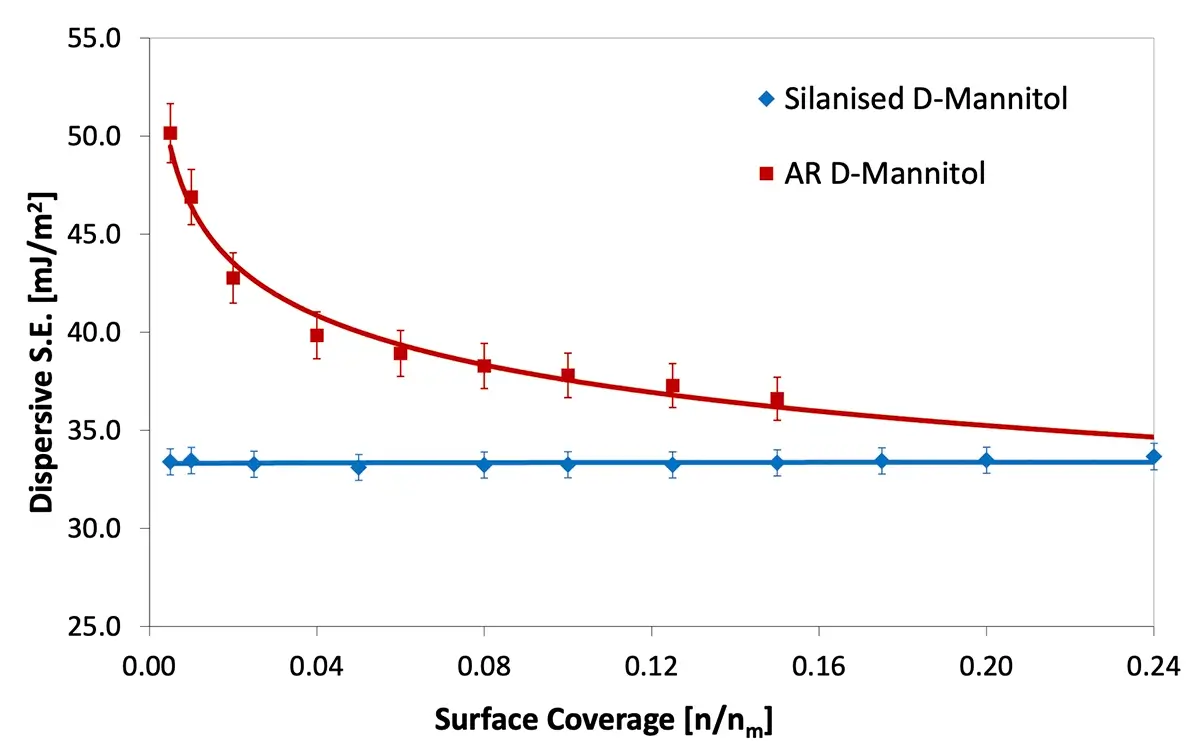
Figure 3 Dispersive surface energy profiles as a function of surface coverage
The silanized D-mannitol, on the other hand, shows a much more homogeneous surface , with an average γᴬᴮ around 1.6 mJ/m² and a low γᴬᴮ/γᵀ ratio, typical of hydrophobic and low-polarity materials . These data indicate a surface with fewer strongly energetic sites and more uniform behavior in adsorption and particle–particle interaction.
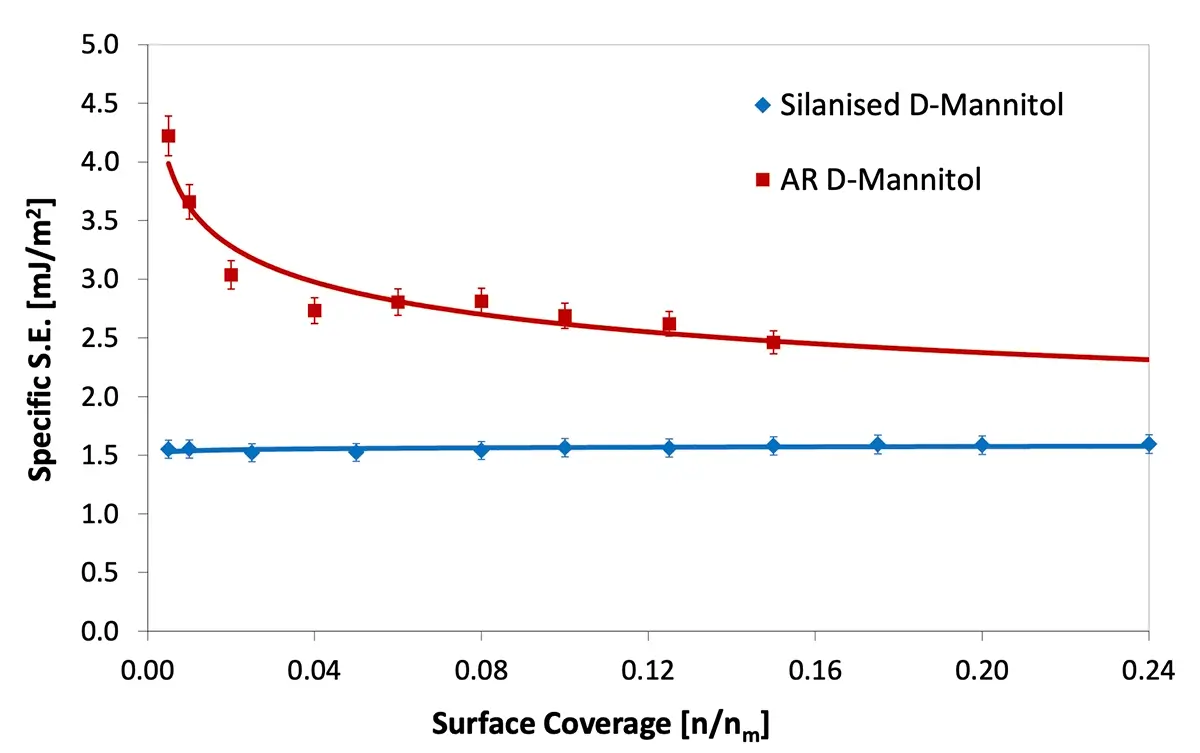
Figure 4 Acid-base surface energy profiles
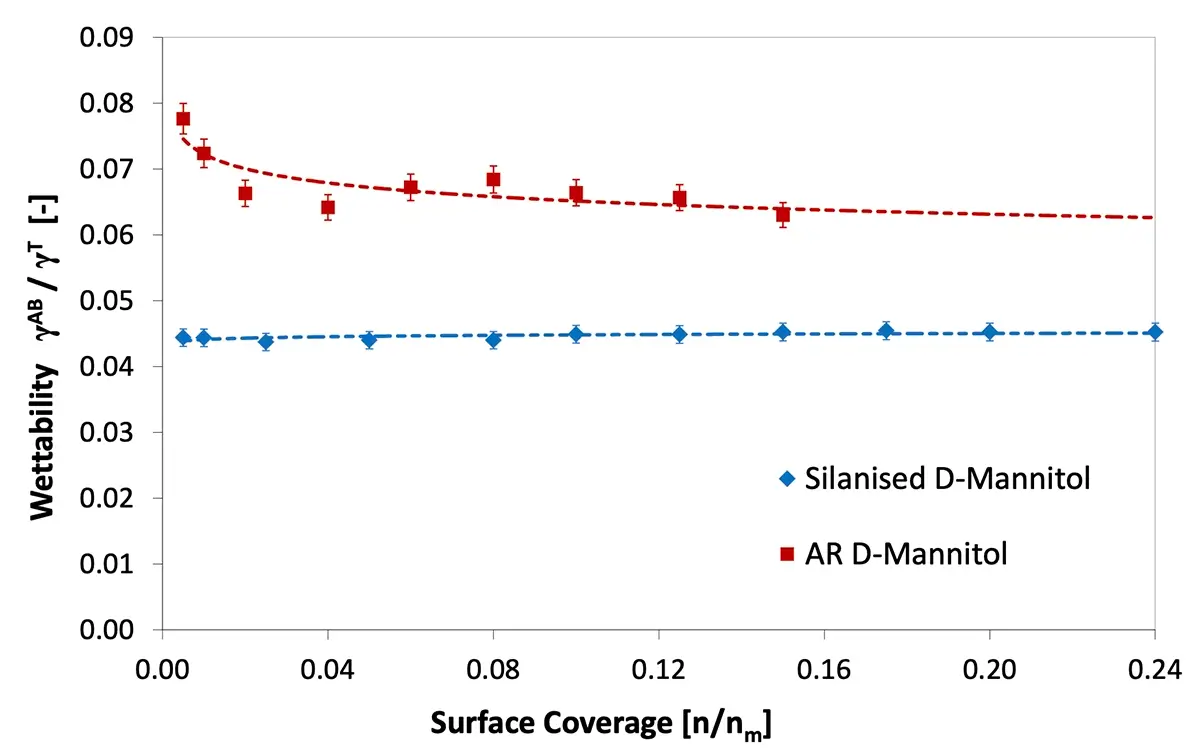
Figure 5 Wettability profiles (γAB / γT) as a function of surface coverage
Practical conclusion: even without changing the particle size, reducing polarity and energetic heterogeneity leads to a less cohesive and more predictable powder.
How to quantify the effect of a surface treatment?
Here the iGC SEA shows its greatest value for technicians and researchers: it allows them to quantify, with numbers and profiles , the impact of a surface treatment.
Before methylation, the D-mannitol energy profiles exhibit wide heterogeneity and a high acid-base contribution. After silanization, the same profiles "narrow," with less variation in γᴰ and a significant drop in γᴬᴮ.
This comparison of profiles before and after treatment makes it possible to answer questions like:
-
Did the treatment actually reduce polarity or just "clean" the surface?
-
Did the surface become more homogeneous, or did new high-energy sites emerge?
-
Do different reagents or reaction conditions lead to the same energetic effect?
For process development and optimization, this means moving away from trial-and-error and entering a regime of surface-data-driven engineering .
How to connect surface energy and powder flow in practice?
To translate these data into process language, the study uses the FT4 Powder Rheometer , measuring:
-
Basic Flowability Energy (BFE) – energy required to displace the powder in a standard flow
-
Aerated energy – the powder's behavior under air passage
-
Stability Index – how much the response changes upon repeating the test
-
Consolidation Index – sensitivity to consolidation
-
Wall friction angle – the friction of the powder with solid surfaces typical of equipment
The results are quite illustrative:
-
The AR D-mannitol shows BFE around 333 mJ, higher aerated energy, and unstable behavior at low air speeds, along with a higher CI and slightly higher wall friction angle. All this points to a more cohesive material and more sensitive to handling conditions .
-
The silanized D-mannitol , on the other hand, has a reduced BFE to about 87.7 mJ, lower aerated energy, lower CI, and a slightly reduced friction angle, characterizing a powder that is clearly more free-flowing and less prone to consolidation and flow problems .
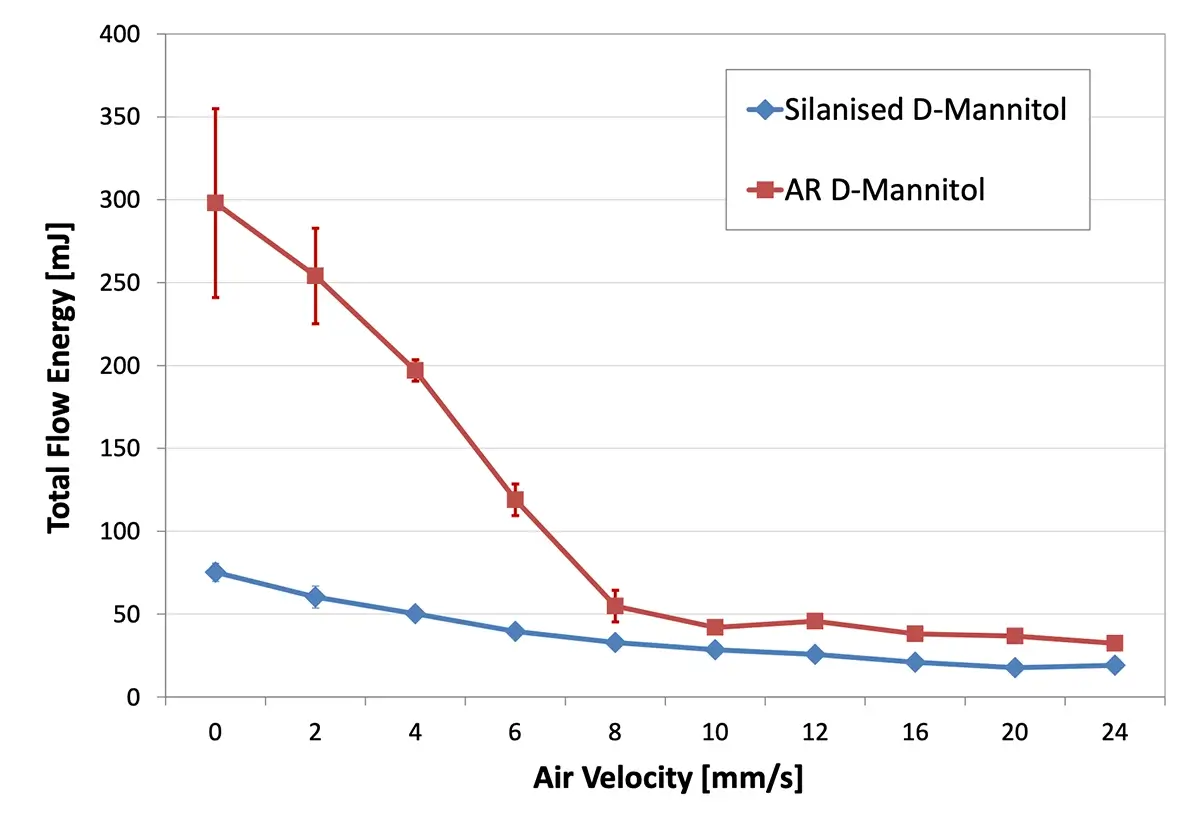
Figure 6 Flow energy as a function of aeration measured on the FT4 powder rheometer
In parallel, from the surface energy values, it is possible to estimate the thermodynamic work of cohesion . The data show that the material with a more heterogeneous and polar surface (AR) exhibits greater cohesion , exactly in line with what the FT4 measures in terms of flow.
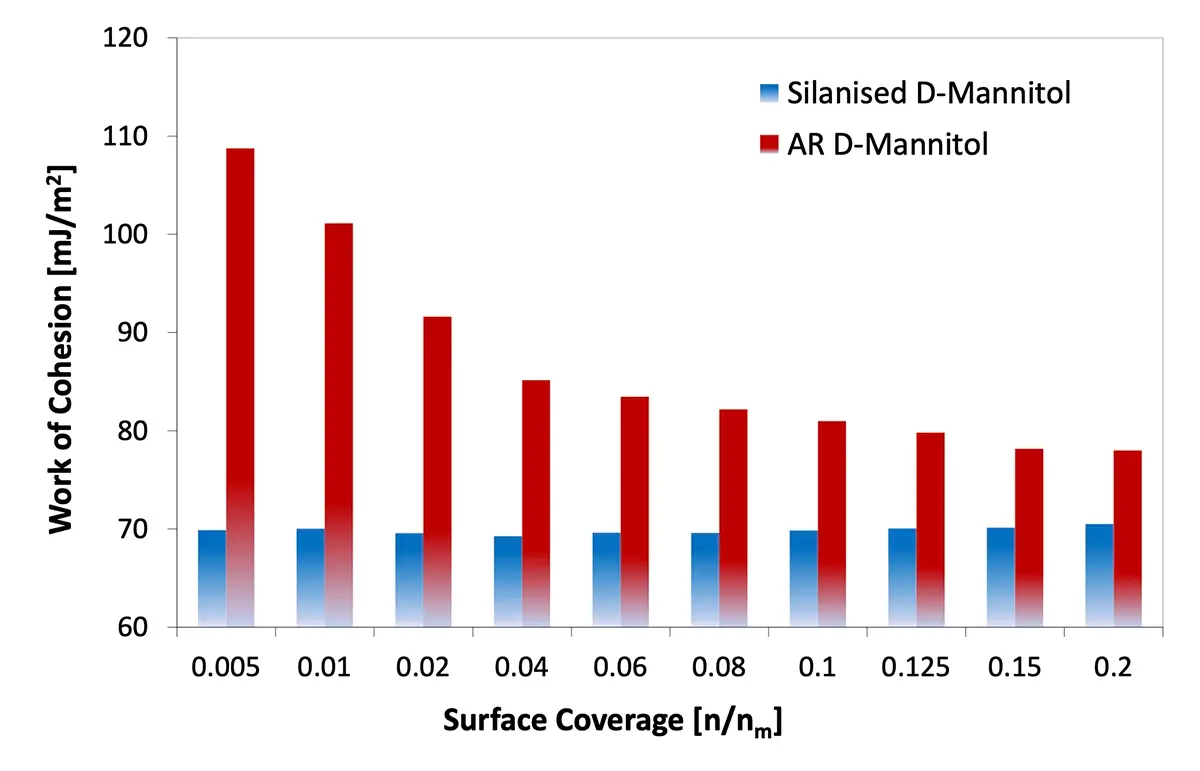
Figure 7 Thermodynamic work of cohesion as a function of surface coverage
Key point: the bridge between iGC SEA and FT4 is built by thermodynamic cohesion — and it closes the loop between surface chemistry and performance in real equipment.
Is it possible to predict flow problems from energy measurements?
The study indicates yes, especially when observing:
-
Broad and heterogeneous surface energy profiles , which tend to indicate greater cohesiveness
-
High acid-base contributions , suggesting more polar surfaces and more prone to moisture adsorption or the formation of specific interactions
Materials with this type of energetic signature are more likely to present:
-
instabilities in hoppers and silos
-
difficulty in filling dies and capsules
-
flow variability between batches that appear "equal" in particle size
On the other hand, more homogeneous and less polar surfaces tend to behave as "easier" powders from a rheological standpoint , provided other variables (size distribution, shape, density) are under control.
Are treatments to improve flow really effective?
A recurring question in practice is whether treatments proposed to "improve flow" actually deliver what they promise. The study with D-mannitol gives an example of how to answer this objectively:
-
Measure the surface before and after with iGC SEA, observing changes in γᴰ, γᴬᴮ, γᵀ, and in heterogeneity profiles.
-
Compare flow behavior before and after with FT4 (BFE, CI, aerated energy, wall friction).
-
Verify whether the reduction in cohesion and improvement in flow correspond to the expected changes in surface energy.
In the case of D-mannitol silanization, the answer is clear: the surface modification actually delivers a more free-flowing powder with more stable behavior , in direct response to the reduction in polarity and the homogenization of energy.
With this type of approach, decisions about surface treatments cease to be "bench feeling" and become justified by quantitative metrics .
Why is the iGC SEA of interest to those developing formulations and processes?
For technicians, researchers, and engineers working with pharmaceutical, food, ceramic, or chemical powders, the study shows that the iGC SEA:
-
allows seeing the surface in a distributed way , not just through average values
-
helps explain flow differences between batches , synthesis routes, or drying conditions
-
provides a basis to design surface treatments, coatings, and blends targeted to specific flow goals
-
powerfully complements rheological techniques like the FT4, creating a complete picture of the material
In summary: the iGC SEA transforms surface energy into a design variable, not just a characterization data point.
Conclusion: from the black box to fine surface control
The study with D-mannitol demonstrates, with a real case of an excipient, that:
-
Energetically heterogeneous and polar surfaces tend to generate more cohesive and unstable powders.
-
Surface chemical modifications can be characterized and quantified by the iGC SEA, and their effects directly evaluated in terms of flow with the FT4.
-
The combination of these two tools allows moving away from a trial-and-error scenario and advancing towards formulation and process engineering based on surface energy , with a direct impact on robustness, scale-up, and industrial performance.
For those who live in the world of powders, this type of approach is not just academically interesting — it is a concrete way to reduce risk, gain predictability, and shorten the path between development and production .
See the full study: https://dafratec.com/storage/file/Case%20Study%20611%20D-Mannitol%20Flowability.pdf
Frequently asked questions about the study with D-mannitol and the iGC SEA
1. What did the study with D-mannitol aim to demonstrate?
The main objective was to relate the surface energy and its heterogeneity to the powder flow properties, showing how chemical modifications influence the material's behavior.
2. Why is surface energy important in pharmaceutical powders?
Because it directly influences cohesion, wettability, and agglomerate formation, impacting flowability, compression, and the filling of capsules or dies.
3. How does the iGC SEA measure the surface energy of a powder?
The equipment injects probe molecules over a bed of packed particles and calculates the adsorption energy, generating profiles of dispersive and acid-base energy as a function of surface coverage.
4. What is the difference between AR and silanized D-mannitol?
AR D-mannitol has a polar and heterogeneous surface, while the silanized one, after methylation, becomes hydrophobic and energetically more homogeneous, resulting in better flowability.
5. What does the γAB/γT parameter shown in the analyses represent?
It is the ratio between the acid-base component and the total surface energy. Lower values indicate lower polarity and greater hydrophobicity, which improves powder flow.
6. How does the FT4 Powder Rheometer complement the iGC SEA analyses?
The FT4 measures dynamic flow properties, such as flow energy and friction, allowing correlation between the surface chemistry measured by the iGC SEA and the real powder behavior in the process.
7. What practical conclusions did the study bring for the industry?
It showed that adjusting surface chemistry can improve powder flow without changing particle size, and that the iGC SEA allows predicting and controlling these effects in a quantitative way.