

Bioreactor Capacity 28-1000L and GMP Technology - LP/P
LP/P Bioreactor: 28–1000 L capacity with GMP technology
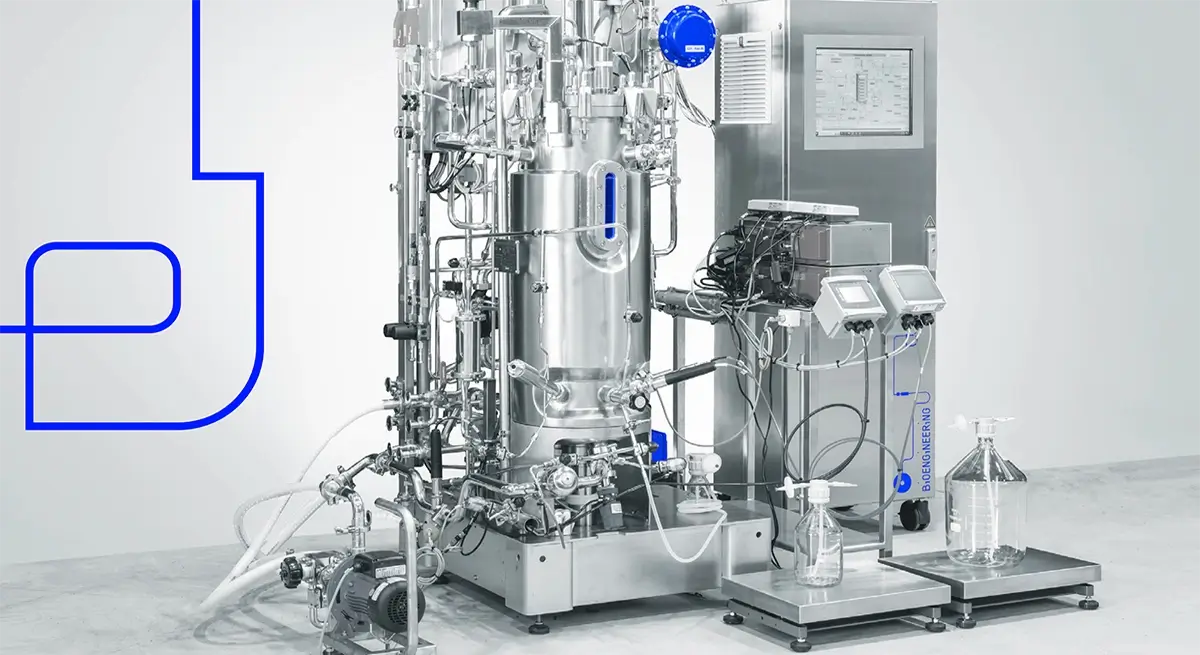
LP/P Bioreactor: 28–1000 L capacity with GMP technology
LP / P
LP/P Bioreactor: 28–1000 L capacity with GMP technology
What is a Bioreactor and Its Importance in Biotechnology
A bioreactor is a specialized equipment designed to create ideal, controlled conditions for the growth of microorganisms, animal or plant cells. The LP/P bioreactor represents an advanced solution based on a proven platform concept, offering flexible adaptation for different biotechnological production demands from laboratory to pilot scale, including applications in bioinputs and biofuel .

The main topics covered in this guide include:
- Technical characteristics of the LP/P bioreactor
- Applications in fermentation and cell culture
- Capacity and dimension specifications
- Control and monitoring systems
- Automation options and GMP documentation
- Competitive advantages of the LP/P series
- Considerations for scaling up
Key Features of the LP/P Series Bioreactor
The bioreactor of the LP/P series stands out for its versatility and advanced technology. This system is suitable for cultivating sensitive animal cells, as well as for microbial fermentation with high-oxygen-demand organisms, providing exceptional flexibility for different biotechnological applications, from cell culture for therapies to production of agricultural bioinputs.

The bottom drive with an easily removable drive shaft ensures low vessel height, facilitating access to the lid and installation even in rooms with limited height.
Available Capacities of the LP/P Bioreactor
The bioreactor LP/P is available in a wide range of capacities to meet different production needs:
- Working volumes (approximate): 28, 33, 50, 65, 100, 130, 200, 300, 350, 500, 700 and 1000 liters
- Vessel material: Stainless steel with double wall, including the bottom area of the vessel
- Drive system: Bottom with belt, double axial face seal, magnetic drive, or top drive
- Optimized dimensions: Different base configurations from 800x800mm to 1500x1380mm
This diversity of sizes allows the bioreactor to meet needs from development studies to small-scale commercial batch production, offering progressive scalability as needs grow. Compatibility with laboratory freezers for inoculum and sample storage ensures an adequate cold chain for sensitive processes.

Specialized Applications of the Bioreactor in Cell Culture
For applications in cell culture , the bioreactor LP/P offers solutions such as rotating filters for perfusion, bubble-free aeration for shear-sensitive cells, and vacuum sterilization for heat-sensitive media. These characteristics are fundamental for the development of next-generation biofuel through microalgae and other specialized microorganisms.
Advanced Features for Cell Culture
The bioreactor system incorporates specialized technologies to optimize cell growth:
- Rotating Filters for Perfusion: Allows continuous cell cultures with constant media renewal
- Bubble-Free Aeration: Essential technology for shear-sensitive cells. Studies demonstrate that this system offers oxygen transfer rates similar to conventional aeration, but eliminates cellular damage caused by bubbles
- Vacuum Sterilization: Protects thermo-sensitive media during the process
- Advanced Sampling Systems: Prevents sample contamination during collection
These characteristics make the LP/P bioreactor ideal for production of recombinant proteins, monoclonal antibodies, and advanced cell therapies, where maintaining cell viability is crucial.
Agitation and Control Systems of the Bioreactor
The bioreactor LP/P uses advanced agitation systems adaptable to the specific needs of each process. The bottom drive with belt and double axial face seal ensures reliable operation and easy access to components.
Types of Agitators Available
Different agitation configurations allow optimization of the bioreactor performance for each application:
- Rushton Turbines: Ideal for high oxygen transfer
- Propeller Agitators: Efficient for homogenizing large volumes
- Inclined Blades: Balance shear and mixing
- Vibromixer: Innovative technology for sensitive processes
Proper selection of the agitation system is fundamental to maximize the bioreactor efficiency and ensure ideal conditions for each type of cultivation or fermentation.
BioSCADA Monitoring and Control Technology
The bioreactor LP/P integrates the BioSCADA system for process monitoring, data management, documentation, batch reports, profiles, cascades, and sequencer program, with intuitive operation that does not require programming skills. Research shows that automated bioreactors are extremely useful for meeting GMP standards, as "the fewer manipulations in the process and the fewer hands that touch the product, the better" .
The system offers comprehensive monitoring of critical parameters:
- Process Parameters: Speed, temperature, pH, pO2, antifoam/level, redox, DO, weight
- Gas Analysis: Complete off-gas analysis
- Various Interfaces: Regulators for external equipment/devices
- Automated Documentation: Generation of batch reports and profiles
The available GMP documentation makes this bioreactor suitable for clinical and commercial production, meeting the most rigorous regulatory standards. Regulatory studies demonstrate that proper documentation is essential for systematic validation, building safety factors and identifying critical control parameters .
Dosing and Transfer Systems
The bioreactor LP/P incorporates versatile dosing and transfer systems to meet different operational needs:
- Manual and Controlled Dosing: Operational flexibility according to needs
- SteriCaps: Sterile addition systems for components
- Transfer Concepts: Multiple options for material transfer
- Complete Automation: Full valve automation when necessary
- Multiple Pump Types: Available according to specific application
Competitive Advantages of the LP/P Bioreactor
The bioreactor LP/P series presents distinctive advantages based on a proven platform concept that allows flexible adaptation to different requirements. Its modular architecture enables integration with storage systems such as laboratory freezers for preservation of cultures and products.
Main Differentiators
The modular system allows flexible adaptation to different operational needs. Research shows that modular components can be developed from laboratory scale to production, ensuring optimized conditions for cell growth and product formation :
- Low Volume Production: Ideal for small batches and pilot studies
- Development-Production Link: Bridge between development and commercial scale
- Wide Range of Options: Multiple configurations available
- GMP Documentation: Available for regulatory compliance
- Flexible Operation: Manual as independent units or fully automated
The fermenters are suitable for both batch and continuous processes, being controlled by local controllers (e.g., PLC) in combination with BioSCADA software.
Detailed Technical Specifications
The technical specifications of the bioreactor LP/P have been developed to meet the highest quality and performance standards in the biotechnology industry, based on validated technical data:
Available Configurations
The bioreactor is available in the following main configurations:
- LP Series: Models 42L (28L working), 50L (33L working), 75L (50L working)
- P Series: From 100L (65L working) up to 1500L (1000L working)
- Internal diameters: Ranging from 250mm to 880mm
- Internal heights: From 760mm to 2686mm
- Dimensional bases: From 800x800mm to 1500x1380mm
Specific Applications
The bioreactor meets different biotechnological applications:
- Microbial Fermentation: Special agitation systems for high-oxygen-demand organisms
- Cell Culture: Solutions such as rotating filters for perfusion and bubble-free aeration
- Continuous Processes: Suitable for both batch and continuous processes
- Scale-Up Studies: Facilitating transition from laboratory to production
FAQ - Frequently Asked Questions about Bioreactors
1. What is the difference between a fermenter and a bioreactor?
Although the terms are often used interchangeably, a bioreactor is more comprehensive, including cell cultures and diverse biotechnological processes, while a fermenter traditionally refers specifically to microbial processes.
2. How to choose the ideal bioreactor capacity?
The choice depends on the desired production scale, type of process, and future scaling needs. The bioreactor LP/P offers options from 28 to 1000 liters for different needs.
3. What types of cells can be cultivated in this bioreactor?
The bioreactor LP/P is suitable for bacteria, yeast, animal and plant cells, with specific configurations for cell culture, bioinput production, and biofuel development.
4. Is it possible to operate the bioreactor automatically?
Yes, the bioreactor can be operated manually or completely automated through the BioSCADA system, with sequence programming and cascade control.
5. What documentation is available for use in clinical production?
The bioreactor LP/P includes complete GMP documentation, allowing use in clinical and commercial production with regulatory compliance.
6. How is bioreactor maintenance performed?
The design allows easy access to components through the removable lid and centralized connections, simplifying bioreactor maintenance procedures.
7. Is it possible to scale processes from laboratory to production?
Yes, the bioreactor LP/P was specifically designed as a link between development and production, facilitating the scaling of biotechnological processes.
Related Reading
To deepen your knowledge about biotechnology, we recommend reading about:
- Industrial Fermenter - Equipment for large-scale production
- Cell Culture - Techniques and applications in biotechnology
- Bioprocess Control - Advanced automation and monitoring
Stay in the loop
Get updates, articles and news by email.
Expect news about equipment, services and regulations tailored to your locale.