

Air Sampler for Microbiological Control - iVAS Series
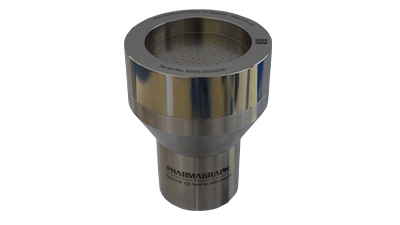
Pharmagraph iVAS Intelligent Air Sampler. Superior physical & proven biological efficiency. Ideal for cleanroom biocontamination control per EN 17141:2020.
iVAS Series
Pharmagraph iVAS Intelligent Air Sampler. Superior physical & proven biological efficiency. Ideal for cleanroom biocontamination control per EN 17141:2020.
Pharmagraph iVAS Intelligent Air Sampler. Superior physical & proven biological efficiency. Ideal for cleanroom biocontamination control per EN 17141:2020.
iVAS Series
Pharmagraph iVAS Intelligent Air Sampler. Superior physical & proven biological efficiency. Ideal for cleanroom biocontamination control per EN 17141:2020.
iVAS: The Smart Air Sampler for Unmatched Microbiological Monitoring
Increase efficiency and consistency in your microbiological monitoring with the iVAS, the new line of intelligent air samplers.
The iVAS Offers:
- Unmatched Performance: Greater efficiency and consistency in air sample collection.
- Simplified Regulatory Compliance: Meets EU-GMP Annex 1 and USP 797 requirements.
- Unparalleled Flexibility: Available in pedestal or tri-clamp for standalone use or integration into isolators and filling machines.
- Simplified Operation: Controls air flow and automatically measures sample volume.
- Compact Design: Everything you need in a single unit, with no external vacuum system required.
Also Meet Our Portable Model

Portable Air Sampler - iVAS Roam
iVAS Benefits
- Greater Efficiency and Consistency: The iVAS offers unmatched performance in air sample collection, ensuring reliable results for your microbiological monitoring.
- Simplified Compliance: The iVAS is designed to meet EU-GMP Annex 1 and USP 797 requirements, facilitating your Environmental Monitoring (EM) program compliance.
- Unparalleled Flexibility: Available in two mounting models, pedestal and tri-clamp, the iVAS can be used as a standalone unit or integrated into isolators and filling machines, offering the ideal solution for your needs.
- Simplified Operation: The iVAS automatically controls air flow and measures the collected sample volume, ensuring accuracy and eliminating the need for manual calculations.
- Compact Design: The iVAS is a compact, self-contained unit, eliminating the need for an external vacuum system and simplifying installation and use.
iVAS Features
- Supports 90 mm Petri Dishes.
- Integrated H2O2-tolerant controller, measuring actual flow and sample volume.
- Continuous or intermittent operation modes.
- 03 flow rates: 100 L/min, 50 L/min, or 25 L/min.
- D50 values of 1.1 µm at 100 L/min, 1.4 µm at 50 L/min, and 1.3 µm at 25 L/min.
- Adjustable height Petri Dish support.
- Physical and biological efficiency test data available.
- Modbus host interface for connecting up to six intelligent iVAS samplers.
Proven Efficiency
The iVAS was sent to an independent testing facility operated by Public Health England's (PHE) Biosafety Research Unit to demonstrate its physical and biological efficiency. Tests were conducted at flow rates of 100 lpm and 50 lpm. You can find the complete test report and results [here] (Insert link to test report).
The iVAS is the Ideal Solution for:
- Grade A classified cleanrooms.
- Isolators or RABS lines with H2O2 decontamination.
- General environmental microbiological monitoring.
Contact us today to learn more about iVAS and how it can enhance your microbiological monitoring program.
iVAS Physical and Biological Efficiency Test
Executive Summary
This new European standard EN 17141:2020, released in August 2020, replaces EN ISO 14698-1:2003 and EN ISO 14698-2:2003 in Europe and introduces the Physical Efficiency recommendation that "a d50 value less than 2 µm is considered appropriate". Recent tests conducted by Public Health England's Biosafety Research Unit demonstrated that Pharmagraph's next-generation air sampler, the iVAS, is in full compliance with this recommendation when operated at 50 lpm and 100 lpm.
iVAS Physical and Biological Efficiency Test Results
- Physical Efficiency: At 100 lpm, the iVAS has a d50 of approximately 1.1 µm, and at 50 lpm, the d50 is about 1.4 µm. This represents an improvement of over 45% compared to the previous generation Pharmagraph AH8x90-10x air sampler, which at 100 lpm has a calculated d50 of about 2 µm.
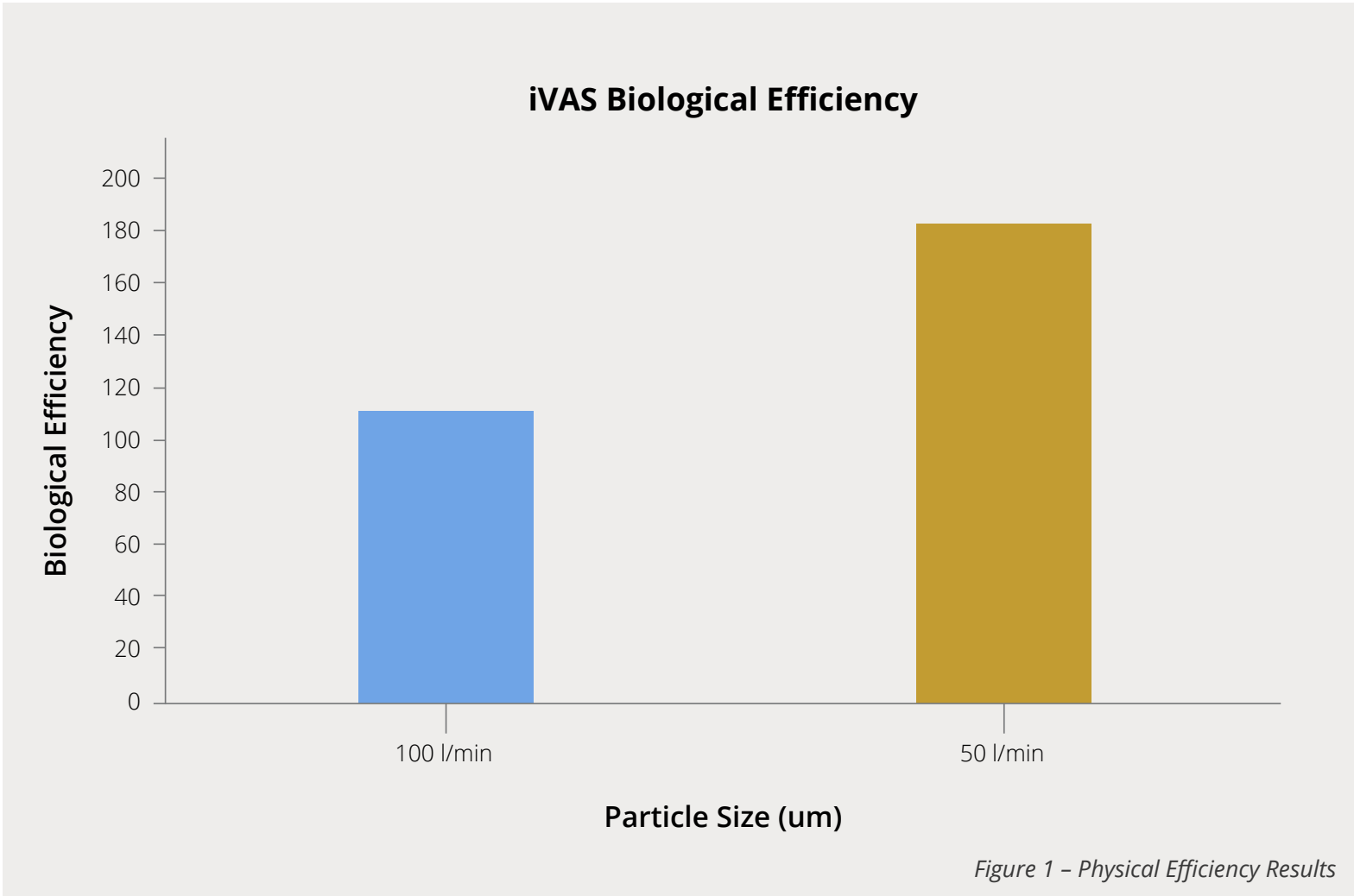
- Biological Efficiency: Tests showed that, at both flow rates, the Biological Efficiency of the iVAS was higher than that of the reference sampler. These results indicate that the iVAS is effective in sampling bacteria-laden particles at both flow rates, without significant loss of viability.
Introduction
The new European standard EN 17141:2020, released in August 2020, reinforces the importance of considering the Physical and Biological Efficiency of microbial air samplers like the iVAS when selecting an air sampler.
Standards and Requirements
Both EN 17141:2020 and ISO 14698-1 outline requirements for Biocontamination Control in Cleanroom Environments. Both standards mention the importance of considering the Physical and Biological Efficiency of microbial air samplers like the iVAS when selecting an air sampler.
Physical and Biological Efficiency Testing
To demonstrate the Physical and Biological Efficiency of the iVAS, it was sent to an independent testing facility operated by Public Health England's (PHE) Biosafety Research Unit. The Physical and Biological Efficiency tests were conducted by PHE at flow rates of 100 lpm and 50 lpm.
Test Procedure
Tests were conducted in a 20 m³ room with turbulent air flow. An aerosol generator was used to produce an aerosol of bacterial spores (Bacillus atrophaeus) in controlled particle sizes. The aerosol generator was placed in the center of the test room and the samplers were arranged in a semicircle around it.
After effective distribution of the aerosol in the test chamber, the samplers were operated together for a fixed period. During each test, the iVAS sampled onto a Beckton Dickinson BB IC-XT Petri Dish filled with Trypticase Soy Agar.
After incubation, the obtained plate counts were standardized into colony forming units per cubic meter. The results for the iVAS plate were then compared to the membrane sampler to calculate its physical efficiency at each particle size as a percentage of the colonies found on the membrane filter sampler.
Physical Efficiency
The physical efficiency of the iVAS at 50 l/min and 100 l/min was compared to a 0.8 µm membrane filter sampler using the techniques described in EN 17141:2020. This test was performed by an approved external body (Public Health England's Biosafety Research Unit at the Porton Down facility).
Results
Tests were performed at least 10 times for each of the following particle sizes: 0.8 µm, 1.4 µm, 2.5 µm, 6.8 µm, and 13.1 µm.
The physical efficiency of the iVAS was determined as the average physical efficiency observed across all tests for each of the particle sizes listed. The results at 100 lpm and 50 lpm are presented in Figure 1.
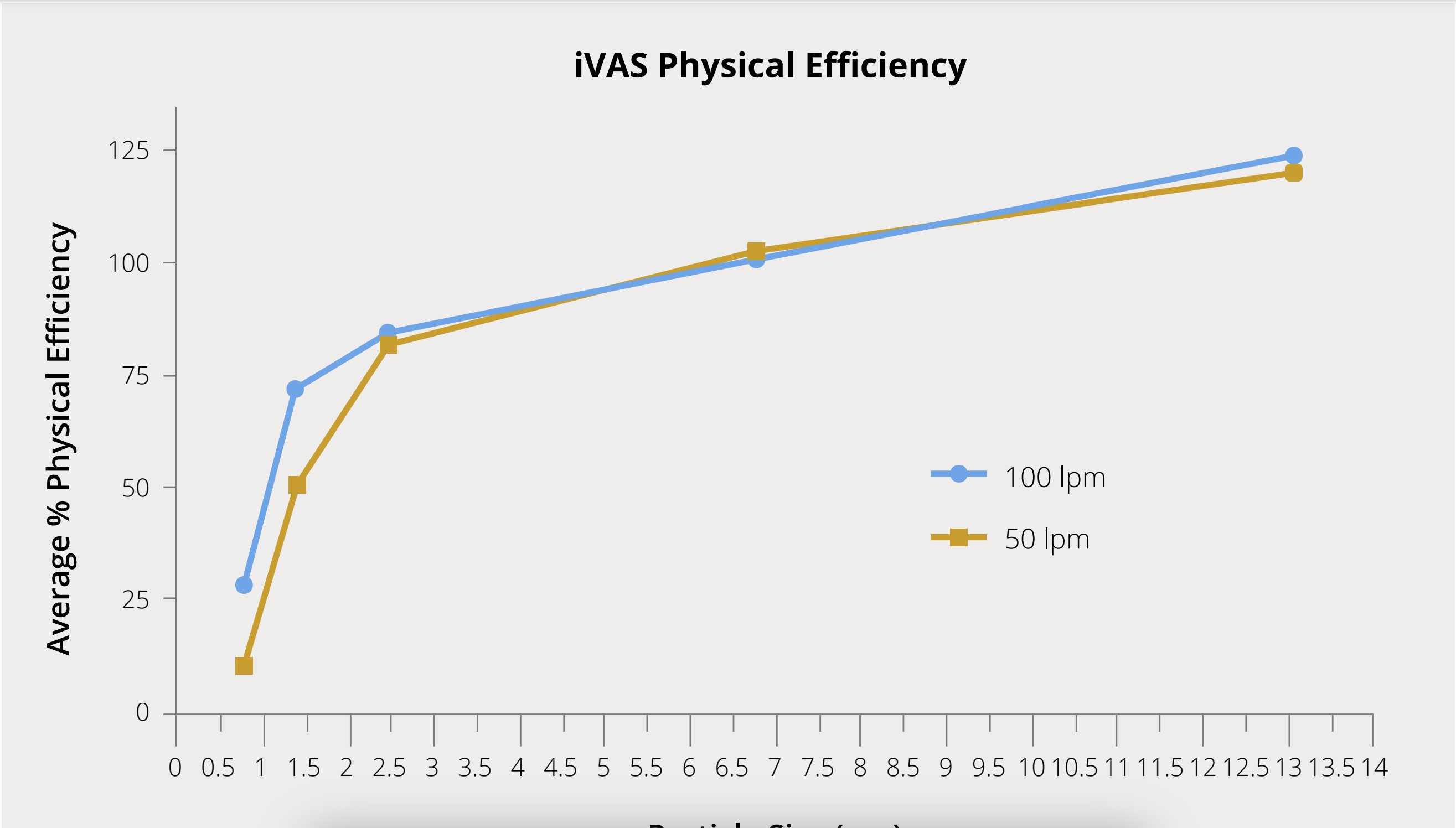
Due to the nature of a 0.8 µm membrane filter sampler, it can be assumed to be 100% efficient at all the particle sizes mentioned above. Therefore, the d50 value for the iVAS is the particle size at which the physical efficiency is 50%. As shown in Figure 1, this is around 1.1 µm when sampling at 100 lpm and about 1.4 µm when sampling at 50 lpm. These values correspond well to the calculated d50 values for both flow rates of 1.1 µm for 100 lpm and 1.6 µm for 50 lpm. In fact, at 50 lpm, the iVAS appears to perform slightly better than expected.
Biological Efficiency
According to ISO 14698-1 recommendations, the human-derived environmental contaminant Staphylococcus epidermidis should be used as an indicator of an air sampler's biological efficiency.
Procedure
Biological efficiency is determined by comparing the recovery rates of a resistant bacterial spore, Bacillus atrophaeus (BA), and the more fragile Staphylococcus epidermidis (SE). Tests were conducted by an approved external body (Public Health England's Biosafety Research Unit at the Porton Down facility) with both samplers using the Beckton Dickinson BB IC-XT Petri Dish filled with Trypticase Soy Agar.
Results
The tests showed that, at 100 lpm and 50 lpm, the biological efficiency of the iVAS was higher than that of the reference Casella sampler. The biological efficiency reported by PHE was derived from an average of at least 20 repeated measurements, as seen in Figure 2.
Conclusion
The Physical and Biological Efficiency tests conducted at Public Health England's Biosafety Research Unit in Porton Down demonstrated that the iVAS, operating at 100 lpm and 50 lpm, complies with the EN 17141:2020 recommendation. The iVAS showed significant improvements over previous models and is effective in sampling bacteria-laden particles without significant loss of viability.
```Stay in the loop
Get updates, articles and news by email.
Expect news about equipment, services and regulations tailored to your locale.